
Using Artificial Intelligence Tool to Facilitate Design and Materials Selection Processes
1 ✉ 1 2
- 1Wolfson School of Mechanical, Electrical and Manufacturing Engineering, Loughborough University, Epinal Way, Loughborough LE11 3TU.
- 2Department of Robotics Engineering, University of Bolton, Deane Road, Bolton. BL3 5AB, UK
https://doi.org/10.66845/dstem.2026.00008
Cite this article
Related Articles
Measuring Human Mycotoxins Exposure Using Biomarkers - A Review
Ukpai Eze
Dialogic STEM Journal · 2026
ArticleClimate Change Resilience and Adaptation Pathways for Africa’s Agricultural Sector
Francis Bisong, Asuquo Okon, Ekaba Bisong and Jackson Akor
Dialogic STEM Journal · 2026
ArticleDesign, Prototyping and Testing of Mechatronic Spinner for Domain-Based Systems Thinking
Chukwuma Ogbonnaya and Chagary Ranjan
Dialogic STEM Journal · 2026
ArticleDynamic Differential Games of Nuclear Proliferation and Preemption under Uncertainty
Innocent Adinebo Katule and Akindele Michael Okedoye
Dialogic STEM Journal · 2026
Contents
Abstract
This study demonstrated how Copilot, an artificial intelligence (AI) tool, was used to facilitate the design and materials selection to conceptualise, design and prototype a mechanical spinner intended to facilitate practicing and gamification of domain-based systems thinking. Domain-based systems and systematic thinking proposed by Dr Chukwuma Ogbonnaya, which can be applied for individual or group thinking activities, includes seven domains (Object, Process, Time, Place, People, Reason, and Specific domains). The spinner prototype was created using AI-facilitated design process, computer aided design optimisation using NX software and additive manufacturing. Integrating Copilot into the product development process reduced the cognitive costs as the large language model provided an opportunity for co-creativity and co-production of a quality and low-cost prototype within a short lead time. Overall, the spinner offers opportunities for creating activities to aid collaborative brainstorming, co-creativity, co-analysis and gamification of teaching and learning statistics and probability.
Keywords
Full text
Reading view1. Introduction
Over the last decade, there has been an increase in the application of artificial intelligence (AI) tools in diverse industries including for generative design and new product development [1,2]. New product development involves taking ideas from conceptual design, detailed design, optimisation, manufacturing and testing. The use of structured approaches such as design thinking, Sprint or Double Diamond frameworks makes the process easy to follow. Currently, as the application of AI takes root in different industries, there is need for designers and engineers to start exploring how to integrate AI tools in the life cycle management of products. Exploring how Copilot can be integrated into rapid prototyping of a novel product or device is the core motivation of this study. The problem of this study was to design a spinner to concretise and operationalise the practice of domain-based thinking proposed in two previous books on the Questelligence theory [3,4]. These books provided the epistemological and ontological foundations for domain-based systems and systematic thinking. The Questelligence theory proposed that thinking (creatively, analytically or reflectively) can be done through cognitive permutations and combination of items from the seven domains including object(ive), process, time, place, people, reason, and specific. Yet, the problem remains that people grapple with thinking because it is generally an abstract cognitive process. There is a need for innovative tools and approaches to operationalise systems and systematic thinking as well as creative problem-solving in the current fast‐paced, ever-changing and multidisciplinary environments. By introducing an element of randomness using domain-based systems thinking, it challenges users of the framework to break conventional thought patterns, fostering creativity with a comprehensive exploration of ideas as an individual or in group. Consequently, the spinner has a significant value when developed.
The aim of this study is to demonstrate how Copilot, an AI large language model, aided the design process and material selection to rapidly create a novel mechanical spinner using additive manufacturing. To achieve this aim, the project was guided by the following research objectives (RO):
RO1: Develop the conceptual design for the spinner.
RO2: Use Copilot and NX to facilitate design optimisation.
RO3: Use Copilot to facilitate materials selection process.
RO4: Conduct Finite Element Analysis (FEA) to identify potential failure points.
RO5: Manufacture components using additive manufacturing process.
RO6: Assemble and test the Spinner.
The significance of this study is that it shows how Copilot can assist in reducing the cognitive cost of deciding on the design and material selection of a product. The second significance of the study is to create a spinner which offers new opportunities to create diverse activities to practice and gamify domain-based systems and systematic thinking. Random domain-selection aspect of the spinner embodies gamification by encouraging users to step outside their 'normal' thought processes. By transforming cognitive tasks into a game-like activity, the spinner introduces an element of surprise and curiosity, which can increase focus and motivation. The interaction during the spinning process aligns with the idea that gamified tools can influence behaviour during engagement. Thus, the spinner, as a gamified tool, stands to enhance creative problem-solving by channelling these principles into its design.
The outline of the paper is as follows. Section 2 provides the background of the study. Section 3 presents the methodology of the research while Section 4 presents the results and discussions. Section 5 presents the methodology also incorporates considerations of material selection, cost, and manufacturability, ensuring that the final prototype is both effective as an educational gadget but also a robust piece of mechanical design.
2. Background Research
Ogbonnaya [3] explained that "…the domain-based thinking approach is the idea that thoughts are based on the seven domains that are intelligible to human mind… The seven Questelligence domains are Object(ive), Time, Place, Process, People, Reason and specific". He proposed that thinking in domains would allow for a more focused systemic decision-making and a systematic creation or analysis of complex systems. The challenge with the theory is that the abstract nature of thinking makes it difficult to understand and practice.
Gamification has been shown to enhance cognitive engagement, motivation, and behavioural learning outcomes [5]. According to Sailer and Homner's meta-analysis [6], game design elements such as game fiction and social interaction (competition and collaboration) are crucial for fostering engagement and improving performance. They asserted that "gamification can affect learning outcomes by enhancing activities that are relevant for learning and might thus create instructional affordances for learners to actively engage in cognitive processes with the learning material." The relevance of these principles to the current spinner is the opportunity to introduce playfulness and structurerandomness to inspire creative thinking. AI-facilitated design process and material selection was used to quickly realise a physical prototype at a low cost.
2.1. Concentration, Learning Style and Systems Thinking
Concentration is essential for systems and systematic thinking, where analysing and connecting complex components are important. Research on fidget toys highlights their ability to improve attention span and problem-solving speed. Hanchate et al [7] stated that, "fidget toys have been significantly popular...and are believed to have multiple benefits, which includes stress relief, anxiety reduction, and even assistance with some serious conditions like attention deficit hyperactivity disorder (ADHD)". This suggests that interactive tools like spinners can create a state of active engagement, making them valuable for systematic exploration of complex systems and creative thinking. A playful yet methodical approach gained from fidget toys bridges the gap between focused effort and innovative problem-solving, making spinners a practical tool for enhancing concentration in both individual and collaborative settings.
The spinner is a versatile tool that can cater to various learning styles, making it an effective aid for diverse learners. According to the 'VARK' model, the four primary learning types are visual, auditory, reading/writing, and kinaesthetic, each with distinct preferences for processing information [8]. For visual learners, the spinner can include visually distinct prompts that help them process information through observation. Auditory learners can benefit from verbal discussions on the outputs of the spinner, reinforcing concepts through sound. The physical act of spinning directly appeals to kinaesthetic learners, who thrive on hands-on interaction and movement. Additionally, reading/writing learners can engage with the spinner by documenting their outcomes or reflecting on written prompts associated with each spin.
By addressing these different learning preferences in teaching and learning environment, the spinner fosters an inclusive and engaging environment for systems and systematic thinking. Its design encourages users to explore ideas in a way that aligns with their natural learning tendencies while also challenging them to step outside their comfort zones. This adaptability makes the spinner a valuable tool for enhancing focus, creativity, and problem-solving across a wide range of educational and professional contexts.
2.2. Potential Applications
The spinner has a wide range of potential applications. In educational contexts, it can serve as a creative aid for brainstorming exercises, encouraging students to explore diverse perspectives and ideas. Teachers can integrate the Spinner into classroom activities, using it as a tool to randomly assign topics or viewpoints, fostering critical thinking and collaboration. Gamified activity design could further engage students and support different learning styles, enhancing participation and retention [9].
Beyond education, the spinner has practical applications in meetings or workshops as prompt innovative thinking by challenging participants to tackle problems from randomized domains of the problem, yet in a systematic and systemic manner. This approach can break cognitive biases and encourage out-of-the-box solutions. Additionally, the spinner's physical and interactive nature makes it appealing for therapeutic or focus-enhancing activities, such as stress exercises or promoting mindfulness, in a similar way to 'fidget spinners. Its adaptability ensures that it can cater to individual needs, whether for creative brainstorming, systematic thinking, happiness associated with learning or improving concentration in diverse scenarios [10].
The Spinner could be used in an educational setting as part of a GCSE or A-Level statistics lesson to generate experimental data for statistics and probability calculations. For instance, the spinner can be spun a set number of times and the results of the frequency recorded using tally.
3. Research Methodology
A mood board assisted to explore various images using Google search engines and prompts such as 'spinner,' 'spinning toy,' games,' and 'fun toy.' This allowed for a deeper understanding of existing spinning products to inform the design of a spinner suitable for domain-based systems thinking. By gathering inspiration from the current designs, the mood board not only showcased the types of products already in use but also provided a foundation for generating innovative concepts, whether by improving existing designs or incorporating components into a fresh creation. Google is a magnificent database, and its use facilitated the ideation stage of the spinner.
3.1. Initial Sketches
Inspired by the mood board exercise, rough initial sketches were created to explore how various components could interact as a system. These sketches facilitated the identification of potential challenges and sparked early considerations regarding suitable manufacturing methods. The insights gained from the initial sketches provided a clearer understanding of design possibilities, laying the groundwork for a structured evaluation process. This approach enabled more informed comparisons and set the stage for selecting a viable design to move forward with.
3.2. Idea Development
To evaluate the initial design sketches systematically, a Pugh matrix was utilized. This method ranks each design against predefined criteria, with lower scores indicating superior designs. The Pugh matrix is particularly valuable as it provides a quantitative basis for selecting the optimal design, ensuring the decision-making process is both logical and transparent. To ensure the chosen design aligns with the intended purpose of the spinner and meets market expectations, the following ranking categories were established:
- Usability – A spinner must be easy to use for people of all ages. Therefore, how intuitive and user-friendly the design is, is important, ensuring it delivers a seamless experience.
- Ease of Manufacture – The design should be straightforward to produce using available manufacturing techniques. This assesses the simplicity of the design from a production perspective, considering potential challenges during prototyping and mass production.
- Randomness – Since the primary function of the spinner is to generate random outcomes, it is essential to evaluate the design's ability to achieve true randomness. This directly reflects the core functionality of the product.
- Manufacture Cost – Keeping production costs low is crucial to ensure the spinner remains economically viable for mass production. This category considers materials and production processes to determine overall cost efficiency.
- Estimated Retail Price – To maximize market success, the retail price must be competitive and accessible for the target audience. This evaluates how much the design could sell whilst balancing against similar products.
- Aesthetics – The visual appeal of the spinner plays a significant role in attracting customers. This category assesses how the design aligns with trends, colours, and styles that would appeal to the target audience.
- Fun – As a product marketed as a toy, the design must deliver an enjoyable and engaging experience. This evaluates how entertaining and satisfying it is to use the spinner.
- Safety – Safety is paramount, particularly for products marketed to the public. This ranks the designs on how easy it is to minimize potential hazards, such as sharp edges or small parts, to comply with safety standards and protect users.
The use of Pugh matrix provided valuable insights into the strengths and weaknesses of each conceptual design. The 'pinball machine' inspired design emerged as the highest-ranked option overall, with a total score of 16, excelling in key areas such as usability and aesthetics. The 'crank' design placed second overall with a total score of 23, demonstrating strong suitability in safety and manufacture related categories. Meanwhile, other options achieved lower rankings, primarily due to challenges related to randomness or ease of use. These findings informed the decision-making process and provided a clear pathway towards which design to pursue but also insight into which areas to refine for the selected design.
3.3. Detailed Sketches
Following the selection of the preliminary design, detailed sketches were drawn to refine the initial concept and gain a clearer understanding of the mechanical functionality and assembly. These drawings allowed for visualization of how individual components, such as the gear mechanism, pull cord system, and shaft, would interact to ensure the spinner operates as intended. The detailed sketches also facilitated a deeper exploration of potential issues, such as component alignment or material choices, while providing insights into optimizing the design for manufacturing efficiency and user experience. By delving into these refined sketches, a solid foundation was established for transitioning from conceptual designs to a feasible, manufacturable prototype.
3.4. Initial Calculations
To evaluate the feasibility of the design and verify whether the envisioned dimensions could accommodate the forces required, a series of initial calculations were performed. These calculations explored key mechanical aspects, including the size and behaviour of the components under operational stresses. This process not only provided insights into the practicality of the chosen dimensions but also laid the groundwork for informed material selection. Using Excel, specific formulas were applied to determine the necessary spring constant and pulling force to achieve the desired top plate maximum velocities, factoring in desired parameters such as gear diameter and maximum extension. This was achieved by first calculating the moment of inertia to then compute rotational kinetic energy. Assuming all the spring's elastic potential energy is converted to kinetic energy the spring constant can be found. Then using Hooke's law, the required pulling force of the operator can be determined. E.g. for the example the desired plate velocity of 300 rpm from 40 mm spring extension, a spring constant of 555 is needed with a required pulling force of 2 kg.
4. Design finalisation
4.1. Gears
Gear design plays a pivotal role in ensuring the functionality and efficiency of the spinner mechanism. Drawing upon research and conceptual exploration, this section delves into gear selection and configuration, highlighting how design choices influence motion, force transmission, and overall performance. The aim is to optimize the spinner's operational reliability while aligning with manufacturing constraints and user expectations. The area that required the most focus was smooth transition when the gear and rack engage. If not linked correctly, this would place unwanted stress on the entire mechanism potentially leading to faults and could cause a stuttering motion of the spinner, retracting from the aesthetics. This needed to be integrated into the gears to remove the requirement for lubrication.
4.2. Application of Artificial Intelligence Tool in the Design Process
In this study, Microsoft Copilot was used to help brainstorm ideas into how the engagement and disengagement could be made as smoothly as possible. Copilots used to co-create the critical aspects of the design as follows:
"Rounded Leading Teeth:
Concept: Round the first few teeth of the handle to facilitate easier engagement with the shaft gear. These rounded teeth will help guide the handle into the gear smoothly.
Implementation: Gradually taper the teeth from rounded to normal tooth profiles. This can help reduce the initial impact and ensure smooth engagement.
- Ramp Profile: Concept: Design the leading edges of the teeth on the handle with a slight ramp or chamfer. This helps the teeth to slide into place more easily without requiring precise alignment. Implementation: Ensure the ramp is gentle enough to guide the teeth into place but not so steep that it affects the strength of the teeth.
- Spring-Loaded Mechanism: Concept: Incorporate a small spring-loaded mechanism to assist with disengaging the teeth once the spring is fully contracted. This can help to automatically release the handle from the gear. Implementation: A small detent or latch mechanism can be designed to push the handle away from the gear once the spring reaches its maximum contraction.
- Clearance and Play: Concept: Allow a slight clearance or play between the teeth to accommodate minor misalignments and ensure smooth engagement and disengagement. Implementation: Design the teeth with a bit of extra space to prevent jamming and ensure reliable operation.
- Material Consideration: Concept: Use a slightly softer material for the rounded teeth to reduce wear and tear while maintaining the strength of the regular teeth for durability. Implementation: This can be done by using composite materials or varying the infill density in 3D-printed parts."
In addition to the use of Copilot as an AI tool to inform the design and engineering process, it was applied to inform the materials selection process presented in Section 5.5. Due to the compact nature of the mechanism and the need to maintain simplicity, incorporating a spring-loaded feature would introduce unnecessary complexity to the design. While such a mechanism might function effectively when the gear is stationary, it could prove too slow to operate reliably at high rotational speeds. Additionally, ensuring its proper functionality during prototyping would demand significant effort and resources, making it less feasible for this application.
An online calculator [6] was used to efficiently experiment with different gear dimensions including tooth count, pressure angle and clearance whilst maintaining the tip diameter used for the initial calculations. This allowed us to better visualise how the teeth interact with each other whilst providing a baseline to begin the modelling process. Following this, a model was made using Siemens NX 12 featuring rounded teeth with a slight chamfer to allow for smoother engagement and disengagement, as suggested before. The centre hole has a diameter of 10 mm to fit the designed shaft. The gear and rack are fundamental components, as their alignment and interaction directly influence the performance of the spinner. Developing the CAD model allowed for detailed analysis of the gear and rack dimensions, teeth spacing, and meshing to confirm their compatibility.
Additionally, the model enabled visualization of potential design issues, such as improper tooth engagement or stress points, and provided an opportunity to refine the geometry before physical prototyping. Tooth alignment was tested using the NX 12 'animations' application by setting the tooth faces as contact points then slowly dragging the rack to see if they engage smoothly every time, if this was not the case then further refinement of the tooth shape was made e.g. adjustments to pressure angle and edge blend radius. Stress points were located using FEA in the NX 12 'pre-post' application giving values ~ 20 MPa which is much below the failure stress of acrylic at around 55-75 MPa. This was also a worst-case test as the centre of the gear was constrained to be fixed, simulating that the top plate was being held when the spinner is activated, however during regular use the gear would be free to rotate in the same direction as the force.
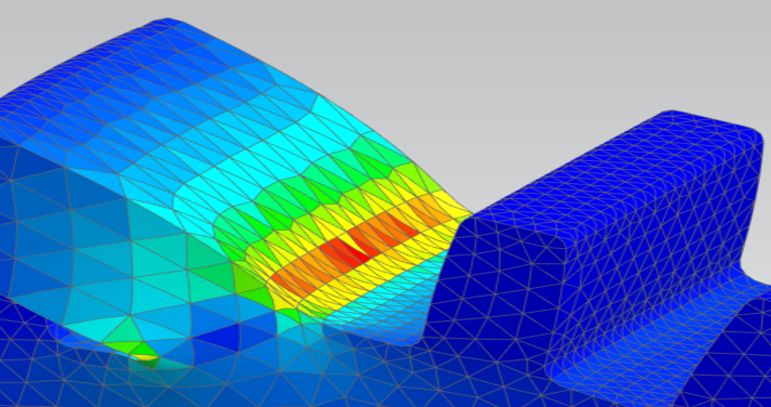
This process helped in determining whether the gear could be manufactured within the envisioned size constraints while supporting the required forces, as well as informing the material selection to ensure durability and efficiency under operational conditions. Overall, the CAD model served as a crucial tool for verifying the feasibility of the gear design early in the development cycle.
4.3. Shaft
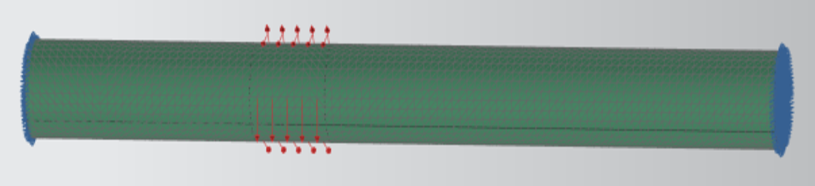
Designing the shaft was much simpler, as after a quick FEA model using different materials including acrylic, aluminium and birch, the relevant stress values were much lower than the failure stresses. For birch, the max principal stress was 0.55 MPa which is much lower than the shear strength of birch at around 10 MPa [11]. The FEA simulation used very simplified boundary conditions with both ends being fully constrained as shown in Figure 2. However, the ends would be supported by bearings and therefore have less resistance when rotating as they can move in the same direction as the force. With less resistance on each end, there would be less tortional stress; meaning that although it is a simplified model, it still shows that the materials chosen are acceptable. Due to this CAD modelling, the need to implement further supporting measures for the shaft was not required.
4.4. Assembly Modelling
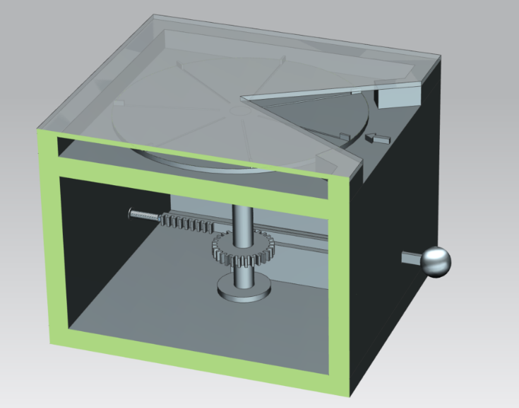
Once the main components were established, an assembly was created using NX 12's 'Assemblies' application. The spinner comprises a top plate, shaft, gear, rack, spring, and two bearings, all enclosed within a three-part casing that includes a rail to hold the rack in place. The assembly was instrumental in assessing how each component fits together and ensuring correct scaling and alignment, particularly for the moving parts.
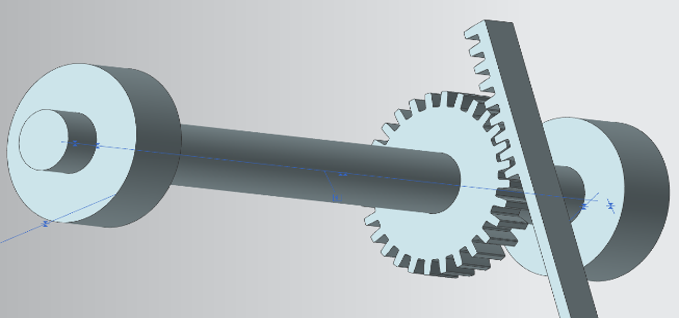
During this process, the assembly highlighted areas in the original design that required adjustments or workarounds. For instance, the rack was unable to fit through the designed hole in the casing, necessitating a modification where the rack would be printed in two separate parts. Another area that was changed was the top safety cover, allowing a small gap at the front to provide the user with the opportunity to include their own outputs on the top plate, increasing its usability. Similarly to testing gear meshing, the 'Animations' application was employed to demonstrate how the spinner would function. The animation process provided a valuable perspective on the design. The selection of all moving parts, their respective directions, and ensuring that stationary components remained static ensured a full understanding of the design and mechanism.
4.5. Use of Copilot for Materials Selection Process
As large language models are populated with products and engineering data, AI tools will learn more about designs and materials. Copilot was used to search for plastics and their characteristics that could meet the engineering properties required of the gear system MatWeb (see https://www.matweb.com/).
4.5.1 Plastics
Acrylonitrile-Butadiene-Styrene (ABS) – durable and tough (good for mechanical stress), rigid (will maintain its shape well), moderately scratch resistant (good against daily wear), easy to post-process, good heat resistance, relatively cheap (can be used for cheap mass production, weak against UV (would need additives to protect against long sunlight exposure). Polypropylene (PP) – high fatigue resistance (good at withstanding repetitive movement), high impact resistance, lightweight. Weak against UV. Acrylic – gloss finish (attractive, looks like a toy), lightweight (can be used as a casing without adding too much weight, impact resistant (strong against general wear), strong UV resistance. Sensitive to scratches (would need a finish).
Polycarbonate (PC) – high impact resistance (good for mechanical impacts), high toughness, low scratch resistance (needs a coating), more expensive, requires higher temps for processing. Nylon – high toughness (excellent for wear and mechanical stress), good impact resistance (handles repetitive use well), resistant to abrasion (ideal for moving parts), moderately flexible (can absorb shock without cracking). Sensitive to moisture (can absorb water and swell), requires high processing temperatures, relatively expensive. Polylactic Acid (PLA) – easy to 3D print (low processing temperature and minimal warping), biodegradable (eco-friendly, derived from renewable resources), good surface finish (suitable for aesthetic applications), rigid but brittle (not ideal for high-impact use). Weak heat resistance, less durable than other plastics.
4.5.2 Metals
Mild Steel – High strength, high impact resistance, easily machined, can corrode. Stainless Steel – similar to mild steel, higher corrosion resistance, good resistance to fatigue, lower machinability, more expensive. Aluminum – lightweight, corrosion resistant, high machinability, less strength than steel alternatives, more prone to wear.
4.5.3 Woods
Oak – very durable, scratch and impact resistant (good against wear), high strength. Pine – lightweight, highly machinable, cheap wood. Medium Density Fibreboard (MDF) – highly machinable, cheap, strong, less attractive
4.5.3 Composites
Carbon fibre reinforced plastic (CFRP) – very strong, very lightweight, high impact resistance, high fatigue resistance, expensive, hard to machine. Glass fibre reinforced plastic (GFRP) – high corrosion resistance, lower impact resistance, expensive. Silicon carbide composites – High Hardness, good wear resistance, brittle, very expensive, hard to machine. Selection of the material for rapid prototyping using Pugh Matrix. When choosing the material to use, Pugh matrix was created to rank each type of material using different categories.
| Casing | Material | Price | Hardness | Toughness | Weight | UV Res. | Wear res. | EoM (print) | Total |
|---|---|---|---|---|---|---|---|---|---|
| Plastics | ABS | 3 | 5 | 3 | 3 | 5 | 5 | 2 | 26 |
| PLA | 1 | 1 | 5 | 2 | 4 | 3 | 1 | 17 | |
| PP | 2 | 6 | 4 | 1 | 6 | 6 | 6 | 31 | |
| Acrylic | 4 | 4 | 6 | 4 | 1 | 4 | 5 | 28 | |
| PC | 5 | 3 | 1 | 5 | 2 | 1 | 3 | 20 | |
| Nylon | 6 | 2 | 2 | 6 | 3 | 2 | 4 | 25 | |
| Metals | M.Steel | 1 | 2 | 2 | 3 | 3 | 2 | 1 | 14 |
| S.Steel | 3 | 1 | 1 | 2 | 1 | 1 | 3 | 12 | |
| Aluminium | 2 | 3 | 3 | 1 | 2 | 3 | 2 | 16 | |
| Woods | Oak | 3 | 1 | 1 | 2 | 1 | 1 | 3 | 12 |
| Pine | 2 | 2 | 2 | 1 | 2 | 2 | 2 | 13 | |
| MDF | 1 | 3 | 3 | 3 | 3 | 3 | 1 | 17 | |
| Composites | CFRP | 2 | 2 | 2 | 1 | 1 | 2 | 2 | 12 |
| GFRP | 1 | 3 | 1 | 2 | 2 | 3 | 1 | 13 | |
| SC Comp. | 3 | 1 | 3 | 3 | 3 | 1 | 3 | 17 |
From the plastics, PLA had the strongest result with 17 while PP scored worst at 31. Due to this ranking, along with the ability to print 3D with it easily and cheaply, PLA would be used for most of the components. For the shaft, as it holds a simple cylindrical shape, wooden dowels could be used which are easy to produce and buy. The matrix includes metals and composites although these were not used for prototyping due to higher prices and more complex manufacturing methods.
4.6. Additive Manufacturing Process (3D Printing)
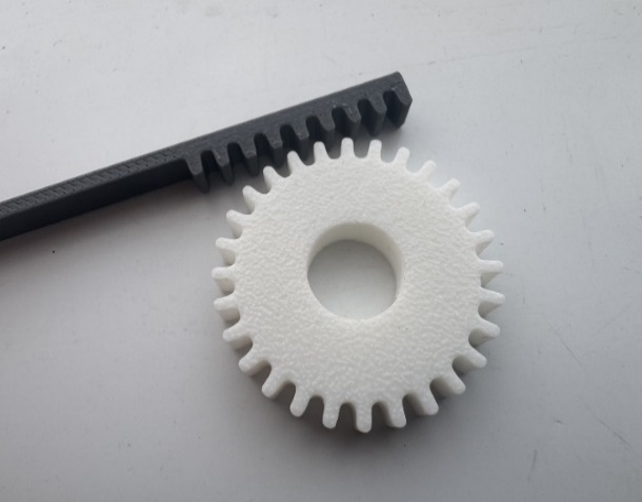
Manufacturing is crucial in realizing novel products [12]. The additive manufacturing phase was instrumental in realizing the prototype. Bambu Lab X1 Carbon 0.4 nozzle printer with PLA filament was used for fabricating the spinner components. This printer provided high-quality prints with excellent resolution and speed. The final NX 12 CAD models were exported as STL files and then processed using Bambu Studio [11], where a 0.2 mm layer height and 20% infill was selected to balance between strength and print time. Careful consideration was given to the part orientation e.g. printing gears horizontally to capture fine details while ensuring structural strength and printing the casing upside-down to reduce supporting material. A Textured PEI Plate as the build surface was particularly effective at improving first-layer adhesion and reducing warping. Multiple components were printed on the same run to save time as shown in Figure 4.
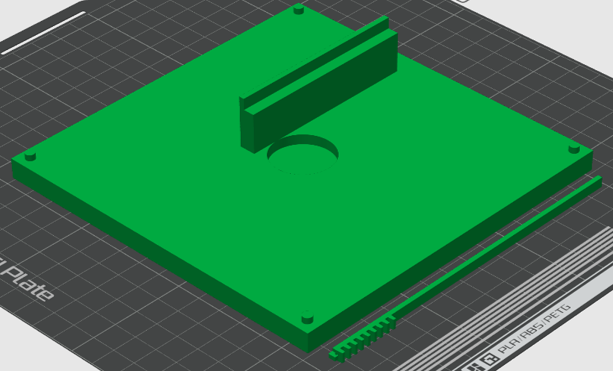
After printing the components, quality checks were conducted using measurement tools to verify dimensional accuracy. For the gear and rack, some of the texturing was left as they would not be seen behind the cover. The casing had a poor 'top side' quality from where supports had to be attached as seen in Figure 5. To combat this in further prints, a denser layer will be applied to that area to help maintain a smooth surface finish after standing.
4.7. Prototype Assembly
Prototypes help to test conceptual designs of products [13, 14]. Once the parts had been printed, the components were assembled based on Figure 6. Springs, bearings and birch dowels were ordered online to meet the required specifications from the initial calculations and revised CAD modelling. This was done to simplify the prototyping as bearings are springs can be difficult to manufacture with limited resources and dowels are widely accessible, streamlining the process.
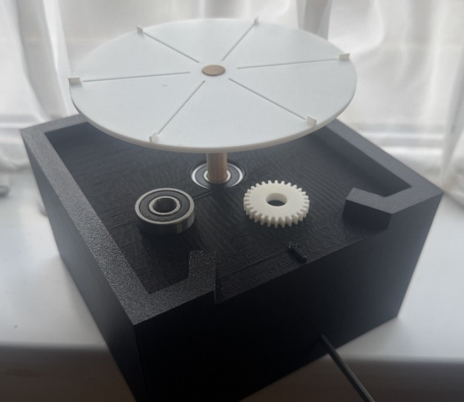
By fabricating an early physical model of the spinner, key design aspects such as assembly fit, dimensional tolerances, and the interplay of moving components, like the gear and rack, can be thoroughly evaluated. Prototypes reveal discrepancies between the digital model and physical realities, such as interference or material performance under stress, before moving into full-scale production. This hands-on assessment was invaluable as it also confirms that the intended energy transfer mechanisms, from the spring to the top plate for example, operate as designed, and identifies any unforeseen challenges. In addition to verifying design intent, prototyping offers critical learning opportunities and informs iterative improvements. Feedback from prototyping can lead to adjustments in component sizing. For the spinner, a shorter casing size was considered during the CAD phase, however feeling the physical model reassured of the enhanced usability of the handle using the taller casing to grip. This is especially noticeable for those operating with smaller hands which cannot grip both sides of the casing at once.
5. Discussions
The first research objective (RO1) was to develop conceptual design for the spinner. This spinner was intended to practice domain-based systems and systematic thinking as proposed two previous books by Ogbonnaya [3,4]. This approach to thinking requires a mathematical process of permutation and combination to create, analyse or reflect based on seven domains of thoughts (i.e. Object(ive), Process, Time, Place, People, Reason, and Specific domains). The realization of a physical spinner prototype satisfied this objective. The second research Objective (RO2) and third research objective (RO3) were to demonstrate how Copilot, an AI tool and large language model, was applied in the design process and materials selection process, respectively. It is important to underscore that the use of the AI tool proved helpful as a productivity improvement tool [1]. The AI tool was used as a co-creative and co-productive tool. In this study, the data pooled by Copilot from different databases was useful in realizing a prototype within a shorter lead time compared to reading articles or books to summarise the information on the design or the characteristics of the materials. The idea of using AI as a productivity tool is growing and designers and engineers need to integrate AI tools to realise quality products at a lower cost and shorter lead time. The successful application of Copilot provides insights into ways it can be used to aid design and material selection. Once a product is designed and optimized, its manufacturing process becomes a repeatable process.
The fourth research objective (RO4) focused on design optimisation using FEA and iterative design improvements to prevent identified failure modes of the spinner. The mindset of lean and agile approach which prioritised continuous improvement to realise cheap and quality product within a short lead time [12]. To achieve the fifth research objective (RO5), additive manufacturing was used to manufacture majority of the components. Additive manufacturing has become a valuable digital manufacturing process and its application for rapid prototyping remains valuable [13]. Additive manufacturing is a critical component of Industry 4.0 technologies, and it aligns with digital platforms such as those enabled by AI. Finally, RO6 was realized by assembling the components manufactured using AM and spring component, after which the Spinner was tested to validate the concept.
6. Conclusions
This study is purposed to design and prototype a spinner which can facilitate the practice and gamification of structured domain-based systems and systematic thinking using Copilot. Here, Copilot was used to inform the design process and material selection. The use of the large language model facilitated access to materials properties data to facilitate the rapid prototyping process through a series of iterative improvements. The AI tool also facilitated the refinement of the design of gear and spring mechanisms to a well-integrated assembly that ensures smooth operation and ease of use. The spinner offers an opportunity to design diverse learning activities based on domain-based thinking. Further digital integration, such as incorporating sensor feedback or a digital display, could also enhance the interactivity of the spinner and expand its potential applications in the educational sector for teaching and learning. Overall, the use of AI tools to inform different stages in product development process is a step change in realising novel devices and systems that can be applied in diverse industries.
Supplementary Materials: NA
Author Contributions: Conceptualization, CO. and CC.; methodology, CC.; software, CC.; validation, CO., CC. and ORO.; formal analysis, CC.; investigation, CC.; resources, CO.; data curation, CC.; writing—original draft preparation, CC.; writing—review and editing, CO and ORO.; visualization, CC; supervision, CO.; project administration, CC.; funding acquisition, NA. All authors have read and agreed to the published version of the manuscript.
Funding: This research received no external funding.
Data Availability Statement: NA
Acknowledgments: During the study, the author(s) used [Copilot] for the purposes of [demonstrating how Artificial Intelligence tool can aid the design and materials selection process]. The authors have reviewed and edited the output and take full responsibility for the content of this publication."
Conflicts of Interest: The authors declare no conflicts of interest.
Abbreviations
AM Additive Manufacturing
AI Artificial intelligence
CAD Computer aided design
FEA Finite Element Analysis
FMEA Failure Mode Effect and Analysis
References
- Rashid, A. Bin; Kausik, M.A.K. AI Revolutionizing Industries Worldwide: A Comprehensive Overview of Its Diverse Applications. Hybrid Adv. 2024, 7, 100277, doi:10.1016/j.hybadv.2024.100277.
- Peckham, O.; Raines, J.; Bulsink, E.; Goudswaard, M.; Gopsill, J.; Barton, D.; Nassehi, A.; Hicks, B. Artificial Intelligence in Generative Design: A Structured Review of Trends and Opportunities in Techniques and Applications. Designs 2025, 9, 79, doi:10.3390/designs9040079.
- Ogbonnaya, C. Domain-Based Systems and Systematic Thinking; KDP Publishing: Great Britain, 2024;
- Ogbonnaya, C. Thinking, Knowing, Doing and Being; KDP Publishing: Great Britain, 2021; ISBN ISBN-13 979-8770636871.
- Khoshnoodifar, M.; Ashouri, A.; Taheri, M. Effectiveness of Gamification in Enhancing Learning and Attitudes: A Study of Statistics Education for Health School Students. J. Adv. Med. Educ. Prof. 2023, 11, 230–239, doi:10.30476/jamp.2023.98953.1817.
- Sailer, M.; Homner, L. The Gamification of Learning: A Meta-Analysis. Educ. Psychol. Rev. 2020, 32, 77–112, doi:10.1007/s10648-019-09498-w.
- Divekar, R.; Chopra, K.; Dange, P.; Mehendale, S. Securing the Future through Sustainability, Health, Education, and Technology; Routledge: London, 2024; ISBN 9781003587200.
- Othman, N.; Amiruddin, M.H. Different Perspectives of Learning Styles from VARK Model. Procedia - Soc. Behav. Sci. 2010, 7, 652–660, doi:10.1016/j.sbspro.2010.10.088.
- Sailer, M.; Sailer, M. Gamification of In‐class Activities in Flipped Classroom Lectures. Br. J. Educ. Technol. 2021, 52, 75–90, doi:10.1111/bjet.12948.
- Erümit, S.F.; Yılmaz, T.K. The Happy Association of Game and Gamification: The Use and Evaluation of Game Elements with Game-Based Activities. Technol. Pedagog. Educ. 2022, 31, 103–121, doi:10.1080/1475939X.2021.2006077.
- Stern, W.L. Encyclopedia of Woods. Science (80-. ). 1966, 154, 877–878, doi:10.1126/science.154.3751.877-a.
- Ogbonnaya, C.; Hegarthy, G. Manufacturing Strategies for a Family of Integrated Photovoltaic-Fuel Cell Systems. Energies 2024, 17, 4837, doi:10.3390/en17194837.
- Sass, L.; Oxman, R. Materializing Design: The Implications of Rapid Prototyping in Digital Design. Des. Stud. 2006, 27, 325–355, doi:10.1016/j.destud.2005.11.009.
- Ogbonnaya, C. and Ranjan, C. Design, Prototyping and Testing of Mechatronic Spinner for Domain-Based Systems Thinking. Dialogic STEM Journal, 2026, 1(1). https://doi.org/10.66845/dstem.2026.00001
How to cite this article
Cite this article
APA style shown. Use “Cite” for MLA, Chicago, IEEE, BibTeX and RIS formats.
Metrics
694
Article views
105
PDF downloads