
Design, Prototyping and Testing of Mechatronic Spinner for Domain-Based Systems Thinking
1 1
- 1Wolfson School of Mechanical, Electrical and Manufacturing Engineering, Loughborough University, United Kingdom.
https://doi.org/10.66845/dstem.2026.00001
Cite this article
Related Articles
Measuring Human Mycotoxins Exposure Using Biomarkers - A Review
Ukpai Eze
Dialogic STEM Journal · 2026
ArticleClimate Change Resilience and Adaptation Pathways for Africa’s Agricultural Sector
Francis Bisong, Asuquo Okon, Ekaba Bisong and Jackson Akor
Dialogic STEM Journal · 2026
ArticleDynamic Differential Games of Nuclear Proliferation and Preemption under Uncertainty
Innocent Adinebo Katule and Akindele Michael Okedoye
Dialogic STEM Journal · 2026
ArticleGas Chromatography Method Development and Validation for Separating Non-polar Volatile Hydrocarbons
Perpetual Eze-Idehen
Dialogic STEM Journal · 2026
Contents
Abstract
This paper presented the design, development and rapid prototyping of a novel heptagonal mechatronic spinner for practicing and gamification of “Domain–Based Systems and Systematic thinking”. The spinner is intended to facilitate teaching, learning, brainstorming, storytelling, systematic thinking, co-creative, co-analysis, leisure and game activities. To realise the Mechatronic Spinner with seven Questelligence domains (i.e. Objective, Place, People, Pro cess, Time, Reason and Specific domains) included steps such as ideas generation, hand sketching, detailed engineer ing design, design optimisations, circuit design, coding, prototyping and testing were implemented leveraging Lean and Agile Design and Rapid Prototyping using additive manufacturing. During testing, the prototype mechatronic spinner generated randomness at each spin, which makes it suitable for application for generating randomness of outcomes. The case of how the spinner can be used for teaching and learning probability and statistics based on the numerical feature of the spinner was instantiated. This device offers an opportunity to develop a wide range of models to practice creative and analytical thinking activities such as domain-based brainstorming, ideas generation and problem-solving.
Keywords
Full text
Reading view1. Introduction
Ogbonnaya [1] proposed thinking as a deterministic mathematical process of permutations and combinations based on sets of items from the domains of thoughts. He explained that these items can be cognitively and randomly selected from seven Questelligence domains (i.e. Objective, Place, People, Process, Time, Reason and Specific domains) which human beings have evolved over many centuries. He hypothesised that a systematic application of the Questelliegence framework could improve cognitive and metacognitive skills of creativity (in which items from the domains are synthesised to create a meaning) [2], analytical thinking (in which a whole meaning is deconstructed into items for better understanding) and reflective thinking (in which both analytical and creative thinking are simultaneously applied to create and analyse meanings). Thinking, although abstract in form, can be applied for brainstorming, creation of new solutions, analysis of existing solutions, reflective thinking, systems thinking, mathematical thinking, etc. This abstract nature of thinking makes it a difficult task for many people to grasp. The overarching goal of the Questelligence theory is to concretise the thinking process and mechanisms of metacognition by providing a physical device that people can interact with to enhance their domain-based thinking skills. This visual approach facilitates analogous thinking as items can easily be classified into the domains and utilised for thinking. The need to concretise thinking motivates the design and development of the proposed Mechatronic Spinner. The prototype was produced using Lean and Agile Design and Rapid Prototyping (LADRP) methodology enabled by the additive manufacturing processes. The concretisation of the domain-based thinking is based on the principle of gamification of teaching and learning. Studies have shown that gamification is very beneficial for teaching and learning because physical objects in a gamified environment act as psychological anchor tools for motivation of learners [3,4]. In this study, gamification of the learning of statistics and probability was used as a case study to instantiate the practical application of the Mechatronic Spinner.
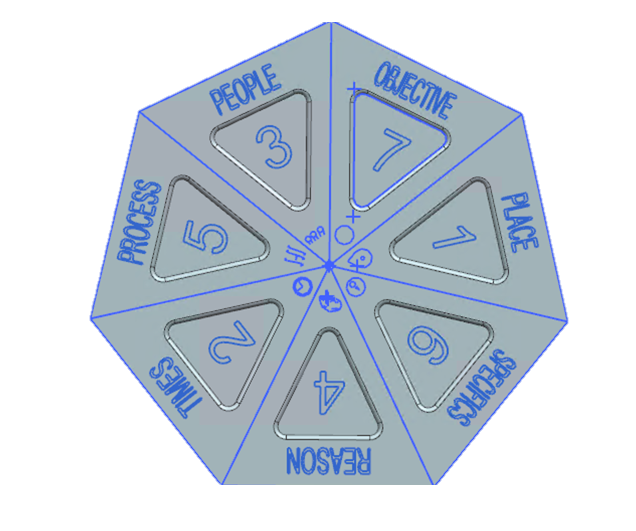
There are two layers of systems thinking in this study. Systems thinking approach required to create the Mechatronic Spinner and systems thinking approach required to apply the spinner in problem-solving and for learning activities. The Mechatronic Spinner is a system because it represents a physical configuration of components that accepts inputs, harmoniously transforms the inputs into outputs based on certain rules and algorithms [1]. Systems thinking is an approach to thinking in which the interactions of the components of a system are considered to visualise how they affect the overall behaviour of a system or how the overall behaviour of a system affects the interactions of subsystems, components and parts [5]. Figure 1 shows a heptagonal shape including the seven Questelligence domains. Contextually, as a way of definition, “Questelligence” was coined from “questions and intelligence”, to suggest that asking questions based on the Questelligence framework can improve intelligence. Detailed theoretical, epistemological and ontological arguments to support the Questelligence framework can be found in two books by Ogbonnaya [1,6].
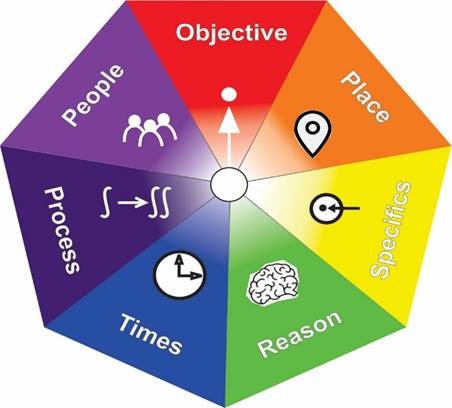
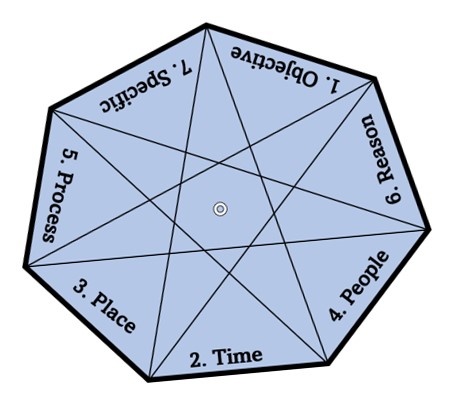
In terms of application of the Questelligence domains for systems thinking, the Objective or Object domain’ focuses on the purpose or concept or physical object on which the action of thinking is focussed on. ‘People domain’ identifies the “human elements in the thoughts” and it may include people, states, organisations or fictional persons. The ‘Place domain’ emphasises the “space which can be positional on the body of objects, geographical, virtual or abstract”. ‘Process domain’ represents the notion of change or transformation from one form to another or from one state to another. ‘Reason domain’ uses the “permutations and combinations of different domains to create logic, structure and patterns”. The ‘Time domain’ provides the notion of past, present and future while the ‘Specific domain’ pinpoints an item from “several items from the other six domains”. The fundamental proposition of how these domains enable thinking is that items are selected from these domains based on mathematical processes of permutation, combination, set theory and probability to analyse, create and share meanings.
As a pedagogical approach, gamification makes teaching and learning more structured because the intended learning outcomes can be embedded in games [7,8]. Evidence from research agree that gamification of learning increase motivation, positive attitude in individuals and makes learning tasks more engaging – thereby making learning more effective and a happy experience [9–12]. For instance, high levels of dopamine were found in a situation involving uncertainty [13]. Skok [14] stated that randomness is a “powerful tool of releasing positive emotions” and increasing attachment to a game. In a study, Ozcelik, Cagiltay and Ozcelik [15] divided 140 computer engineering students into two groups during an activity – one to undertake certain task and the other to undertake uncertain task. They concluded that the effect of gamified uncertainty in the group with uncertainty in their learning task caused them to perform better than the group with certainty in their task. This was supported by Howards [16] who discovered that there was an increase in electrodermal activity when participants in research were asked questions including uncertainty. An increase in electrodermal activity means that the individual is emotionally or physically stimulated. Research suggests that individuals at the extremes of neurodivergent scale find it hard to solve problems due to cognitive inactivity or lack of concentration on the question [17]. Meanwhile, the effectiveness of computational thinking methods can be improved by using frameworks or models [18]. The Mechatronic Spinner serves as a pedagogical gamification tool or tool for structured systems thinking within the Questelligence framework to facilitate cognitive and metacognitive activities.
The overall aim of this research was to design, develop, optimise, manufacture and test a mechatronic-based spinner cable of generating randomness of the seven Questelligence domains. LADRP using additive manufacturing was employed to realise the prototype as quickly as possible at a low cost. To achieve this overarching aim in a systematic way, the following objectives were pursued:
- Generate conceptual designs of the game spinner using hand sketching.
- Down select the best design using a Pugh Matrix.
- Create 2D and 3D engineering drawings of the selected design using NX software.
- Use a Morphology matrix to select materials and processes.
- Perform Failure mode and effect analysis (FMEA) to improve the functionality of the system.
- Optimise critical components using finite elements analysis (FEA) using NX software.
- Manufacture the components using additive manufacturing (AM).
- Assemble and test the Mechatronic Spinner System.
- Demonstrate the Mechatronic Spinner System in gamifying the learning of statistics and probability [19].
- Discuss the applications of domain-based thinking for creative, analytic and reflective thinking.
The originality of creating the Mechatronic Spinner for concertising the Questelligence theory is that it facilitates exploration, practicing and gamification of theory of mind, systems theory, communication, artificial intelligence, systems thinking and systematic thinking proposed by Ogbonnaya [1]. The proposed physical device enables the use of metacognitive framework for formal and informal activities. The contribution of the Mechatronic Spinner System to pedagogy and research is that it will provide new opportunities for investigations of cognitive activities based on the proposed domain-based thinking approach. The Mechatronic Spinner will be valuable in teaching and learning [20], including reproducing it as STEM activity or using it to learn mechatronic systems architecture. The LADRP methodology can enable innovators to create prototypes to test their ideas. The outline of the paper is as follows. The next section presents the research methodology used to realise the research objectives. Section 3 presents the outcome of testing and validation of the Mechatronic Spinner and design optimisation. Section 4 shows how the software and the hardware were integrated into a unified system. Section 5 describes the additive manufacturing process for prototyping of the device. Section 6 presents a case study of generating numerical data which can be used for teaching and learning probability and statistics. Section 7 presents the target costing for the device to facilitate reproducibility. Section 8 explores the application of domain-based systems thinking for creativity, analysis and reflection while Section 9 concluded the study.
2. Research Methodology
2.1 Product Design based on Design Thinking
LADRP methodology was implemented alongside the Stanford University Design Thinking process to realise the Mechatronic Spinner [21,22]. These methodologies are suitable for novel creative problem-solving [22]. LADRP provided an overall framework to realise a quality, cost-effective Mechatronic Spinner System with the shortest lead time. The Design Thinking process offers a step-by-step process of realising the physical device. It involves 5 steps: Empathize, Define, Ideate, Prototype and Test [22]. The Empathise phase was based on the “need to concretise domain-based systems and systematic thinking given that thinking is abstract”. The Define stage specified the challenge of engaging in thinking without having a physical object to interact with, focus on or remember to enhance metacognitive framework for systems thinking.
The Ideate phase involves specifying the Mechatronic Spinner as a mechatronic system, and identifying systems requirements such as ease of disassembly, aesthetics and controllability. Pugh and Morphology matrices were used to create different design options. At this stage CAD designs were created and tweaked with FEA and FMEA leading to the final design option. Due to the incorporation of an electronic aspect, this mode also includes the iterative prototyping of the circuit within the spinner. The Test phase facilitated feedback from the individuals involved in the empathize mode and those involved in the case study.
The Mechatronic Spinner was designed to include mechanical, electrical and control systems [23]. The dependencies of the components of the system were considered at the beginning of the design process. The mechatronic system design process includes modelling and simulation, prototyping and deployment [24]. The RS Design Park website was used to select the DC motor for the spinner due to their easy installation, quick start/stop and very common in small appliances [25]. Brushless motors were used because they are more efficient and quieter, although they can be slightly costlier than AC motors.
2.2 Concept Generation and Down Selection
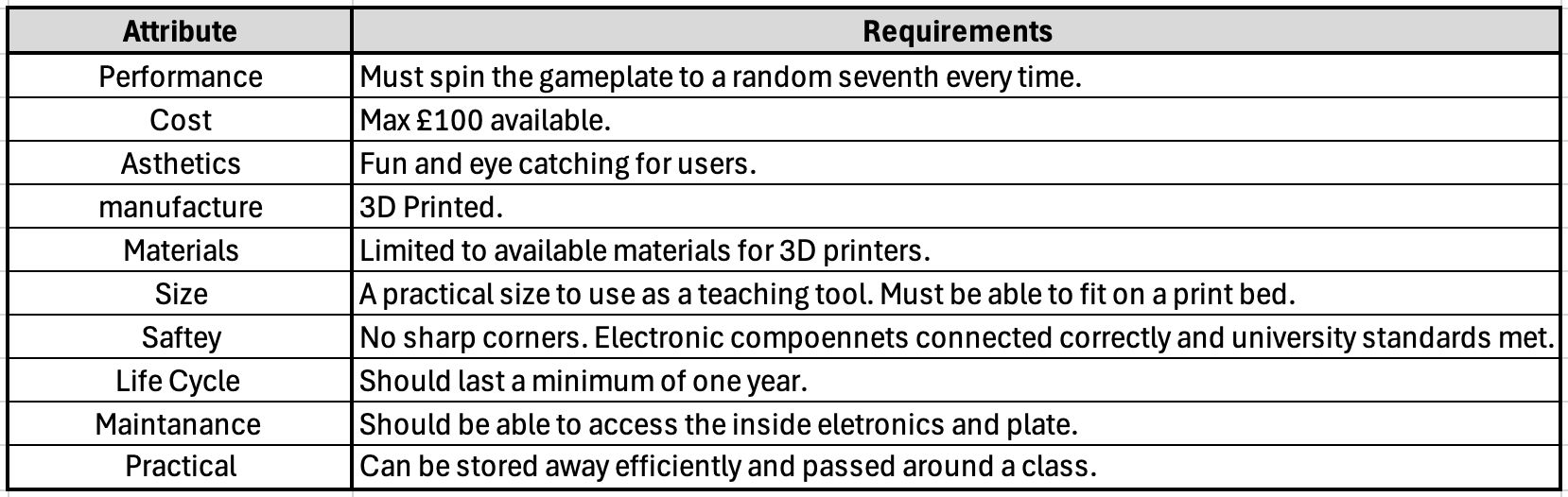
A Product Design Specification (PDS) was created to identify the requirements for the Game Spinner System as presented in Table 1. The key identified limiting factors were cost, manufacturing method, material and lead time. These guided the rapid prototyping processes [26]
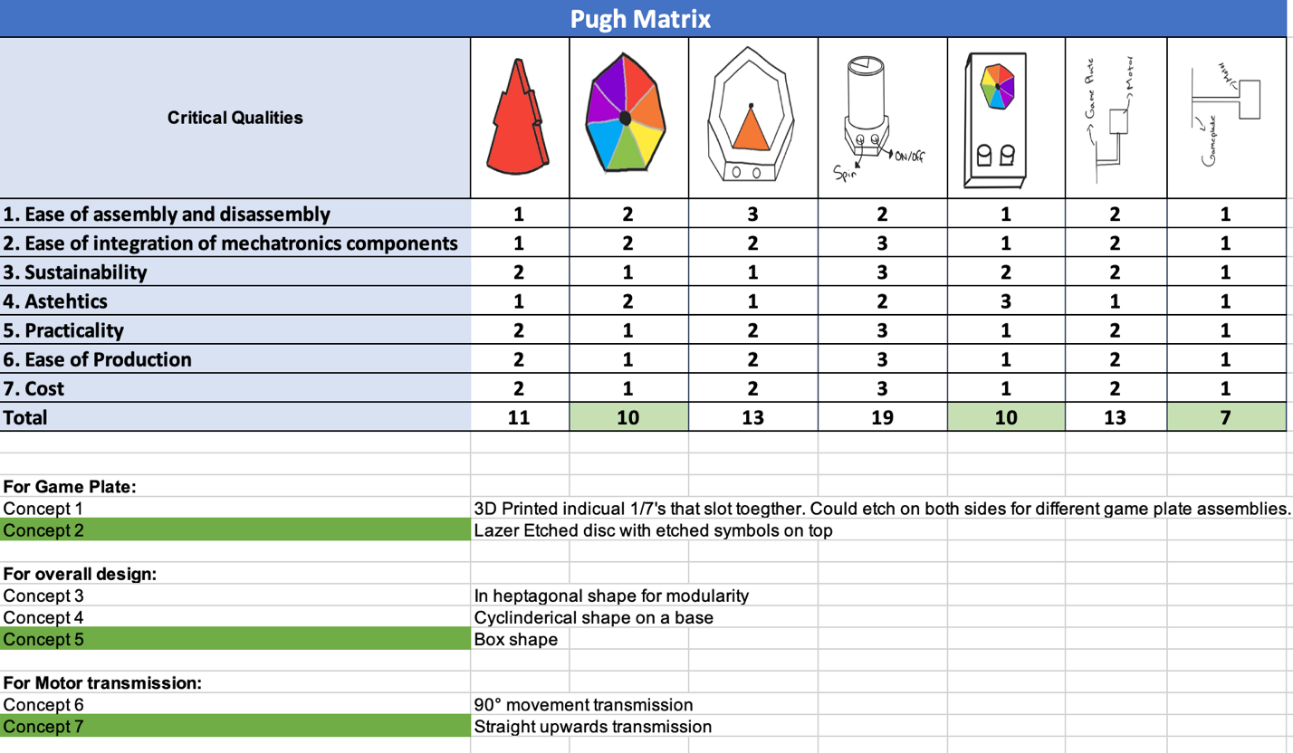
Pugh matrix in Table 2 was used to analyse how each proposed design component interfaces to create the Game Spinner System. Three different aspects of the design were considered: the game plate, the outward casing and the motor transmission. The sections were rated from 1- 3, where the lower the total number results a better option. The heptagonal design was selected in the end after the cuboidal design posed new constraints, and the transmission was to be positioned vertically to make 90 degrees angle with the spinner plate.
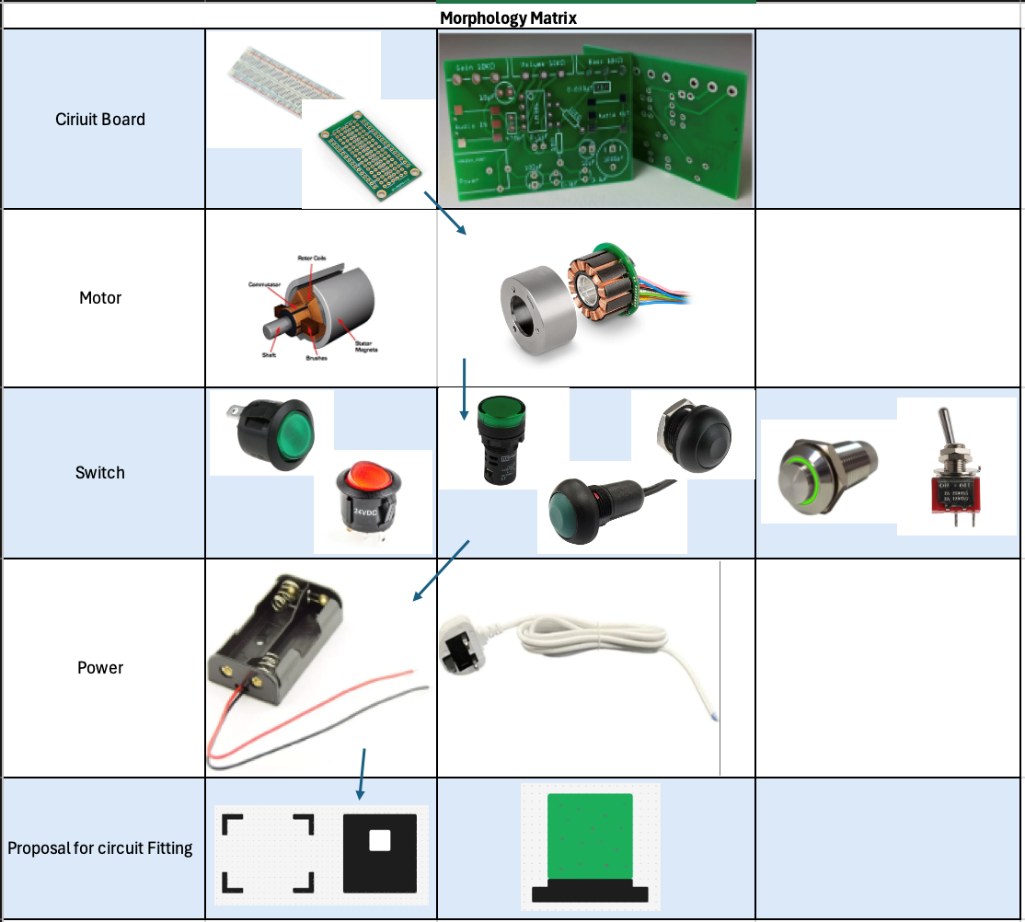
The mechatronic system was to be designed to integrate with the overall system architecture and mechanical system. Morphology matrix [27] was used to explore the type of components to be used to engineer the Mechatronic Spinner. The arrow in Table 3 shows the components selected for the electronic subsystem. The circuit was decided as a prototype circuit using a breadboard as opposed to designing a PCB to connect the Brushless DC motor and battery, on/off button and a push button for the spin button. An LED was also ideal to signify the circuit being on. Using battery pack was deliberately chosen to enable the device to function as a portable mobile device.
3. Design and Optimisation of the Mechatronic Spinner Structure
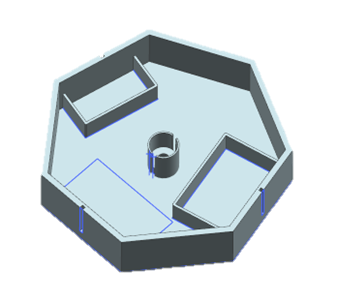
Based on the outcome of the Pugh Matrix, the structure in Figure 2 was proposed to house the mechanical, electronic subsystems and peripheral components such as button, LED and spin button. Upfront, because the Design Thinking process involved getting feedback from the end-users as the design is being iterated, the final design used heptagonal design to enhance the aesthetics of the Mechatronic Spinner. However, it is important to show how design evolved as well as the optimisation efforts that were implemented to realise the research objectives.
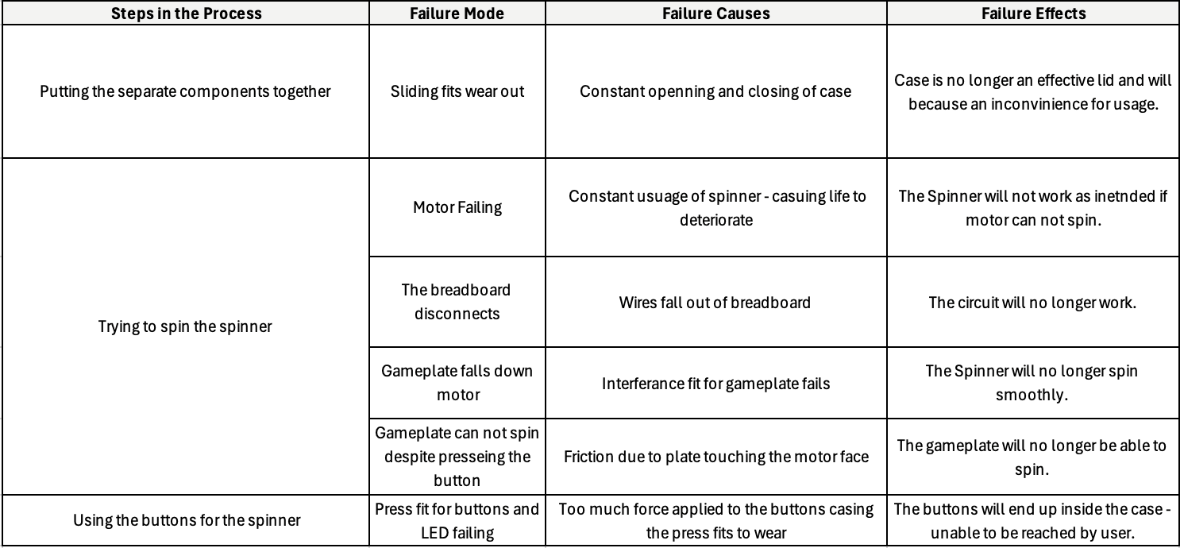
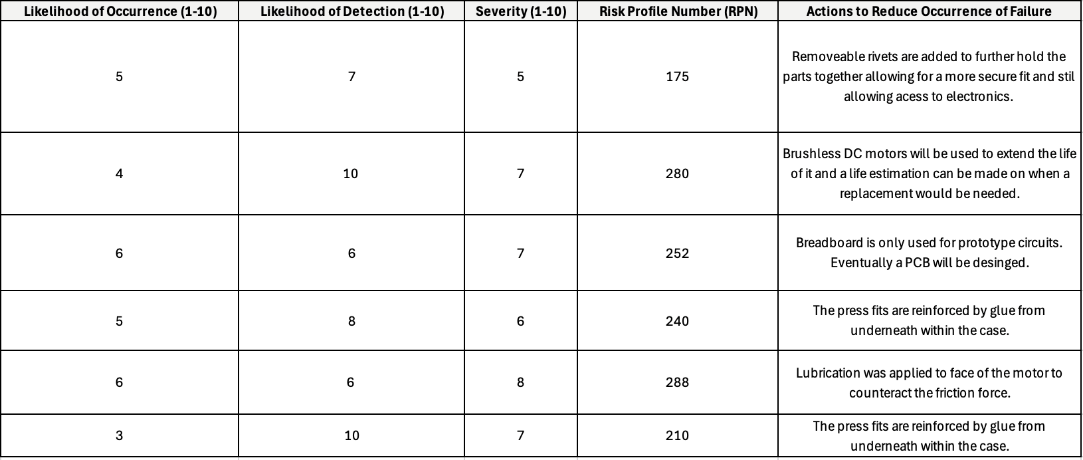
To find potential failure areas, FMEA [28] was done to further optimise the structural design. A failure mode and effect analysis were conducted to identify failure modes that could pose operational risks. The FMEA outcomes presented in Table 4 and 5 show the potential causes of the failures and quantification of the risks of failure based on the likelihood of occurrence, detectability and severity of failure to generate the risk priority numbers.
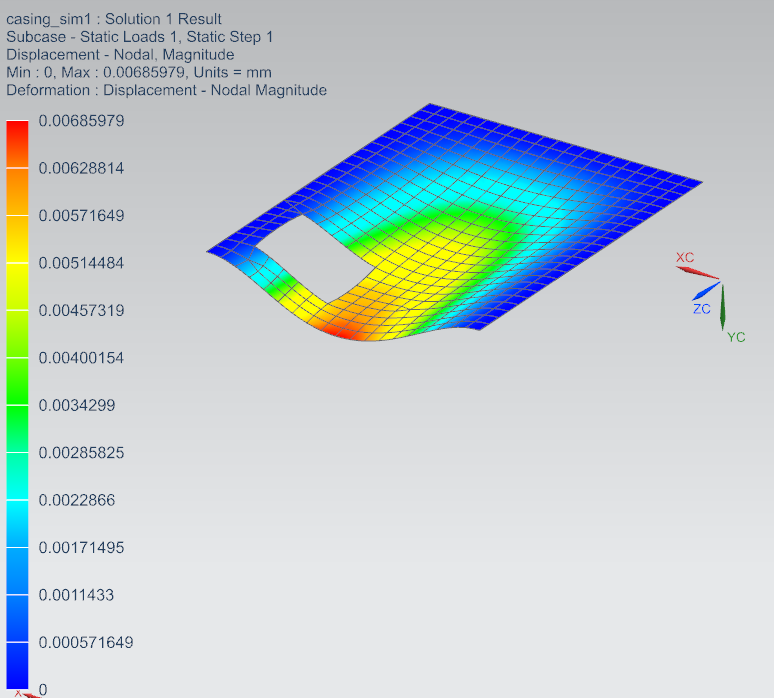
The slotting area is designated for breadboards and Arduino. It is plausible that the platform may fail due to loads. To investigate the reliability of the platform, FEA as an iterative tool [29] was conducted on the platform as shown in Figure 2. The 2D mesh was subjected to point load of 0.3 N to represent the mass DC motor at 30 g. The highest possible deflection was 0.0069 mm, which was insignificant. This finding points to the possibility of reducing the thickness to safe materials and the use of smaller surface area for the platform.
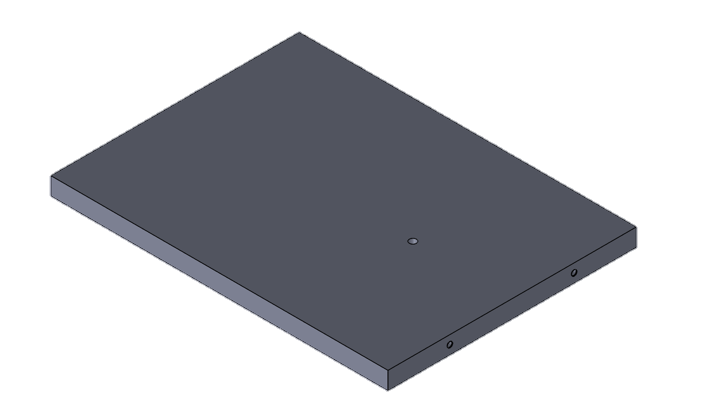
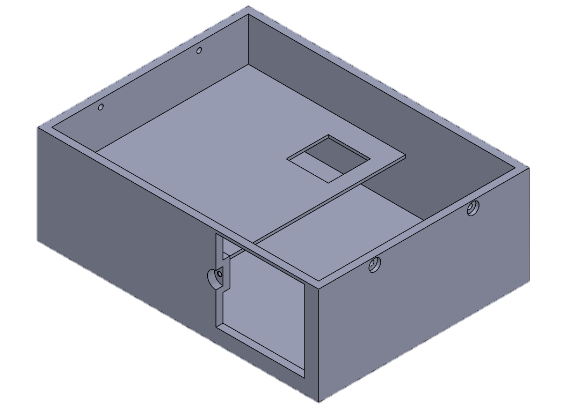
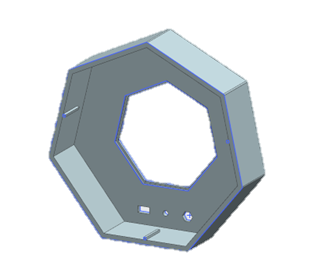
The final design was informed by the risks associated with assembly and disassembly, acceptability due to aesthetics and the frictional force that will reduce the efficiency if the system is not properly integrated. The Mechatronic Spinner structure was redesigned with the heptagonal form in Figure 3. It is important to note that the heptagonal design was initially produced using Additive manufacturing and assembled. Additional insights from the initial testing were used to improve design thereby creating a responsive design and development process at a low cost.
4. Software Integration
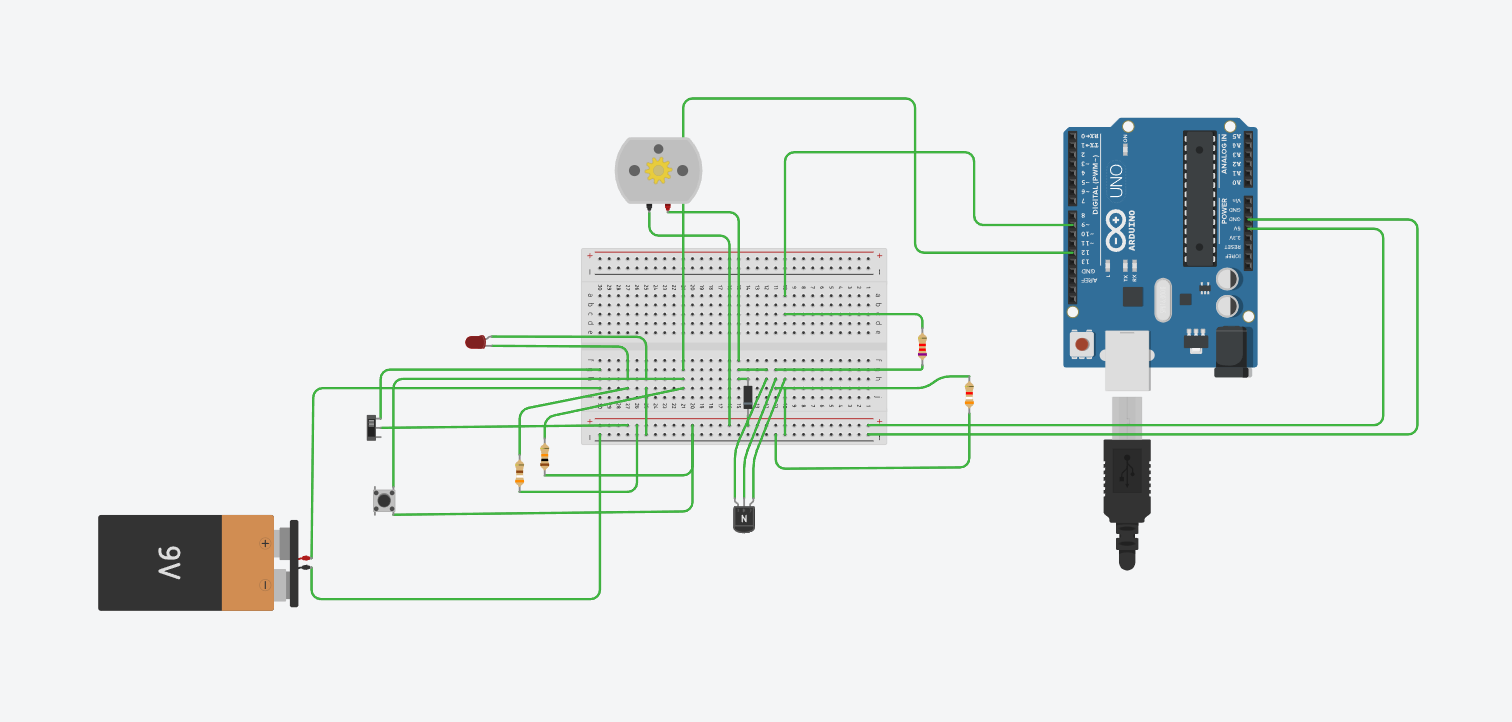
Figure 4 shows the algorithm of the Mechatronic Spinner System. When the circuit is switched on, and the spin button is pressed, a signal is sent to the Arduino to generate a random number of spins. The electronic circuit in Figure 5 was modelled using Tinker CAD [25]. The flip switch controls the LED so that it can indicate when current if flowing through the circuit from a 9 V battery, although only 5 V was eventually used. The push button controls the motor. Arduino coding [30] and circuit building tool and ChatGPT were useful in integrating the components of the systems to generate a random time between 5 and 10 seconds [31].

5. Additive Manufacturing, Assembly and Testing
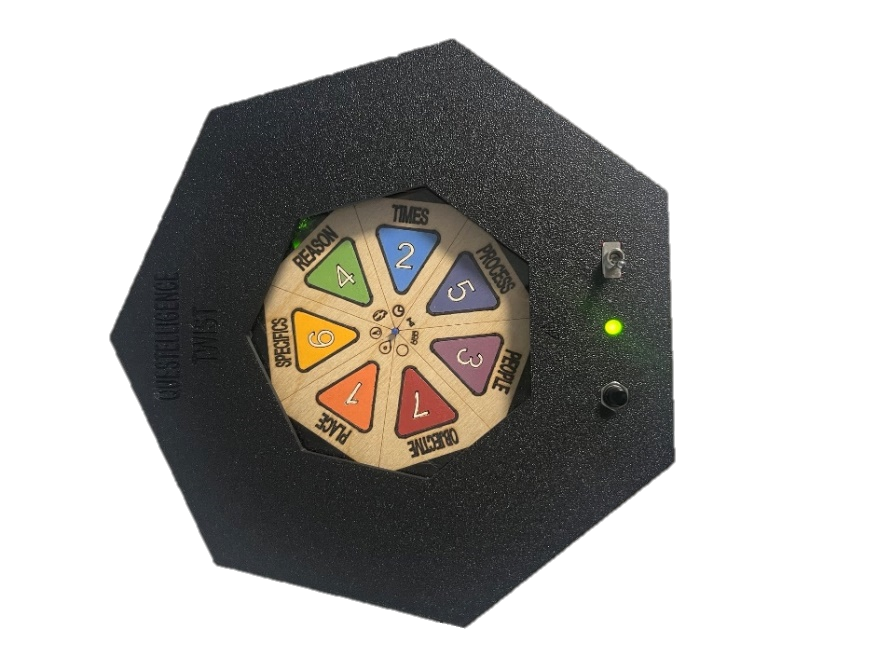
The 3D model of the structure was produced using Additive manufacturing [32,33]. This offered a benefit of complexity for free because the use of traditional manufacturing process would have proved costly and time-consuming. The components purchased from the suppliers and the subsystems were assembled to create functioning Mechatronic Spinner System in Figure 6. The testing of the system was implemented as a case study on the application of the Mechatronic Spinner System for teaching and learning statistics and probability. Mass production using injection moulding can be considered. Improving the aesthetics including colour of the casing may motivate students to use it based on previous findings leading to greater engagement and motivation [34–36].
6. Case Study on the use of Game Spinner System for Statistics and Probability.
This case study tests for randomness of the outcomes generated by the Mechatronic Spinner. Initially, the researchers spun the spinner 200 times and tabulated the outcomes. The Number[frequency] are presented as follows. Side 1[1 time]; Side 2[20 times]; Side 3[20 times]; Side 4[57 times]; Side 5[52 times]; Side 6[10 times] and Side 7[40 times]. Chi-Square goodness of fit test was used to evaluate the fairness of the spinner [37]. The null hypothesis of the test was that the Mechatronic Spinner does not generate significantly random numbers between 1 and 7. The alternative hypothesis was that the Mechatronic Spinner generates significantly random numbers between 1 and 7. The level of significance was set at 0.05. It was assumed that each spin was independent of each other to satisfy the requirements of the Chi-Square test. If the spinner was fair, the expected frequency can be calculated using equation 1.
Expected Frequency = E = n × p (1)
Thus, E = 200 × &frac17; ≈ 28.57, where p = probability of each side = &frac17; and n = no. of spins = 200.
The Chi-Square test statistic can be calculated using equation 2.
χ² = Σ (O − E)² / E (2)
Where O = observed frequency and E = expected frequency.
| O | E | O − E | (O − E)² | (O − E)² / E |
|---|---|---|---|---|
| 1 | 28.57 | -27.57 | 760.1049 | 26.6050 |
| 20 | 28.57 | -8.57 | 73.4449 | 2.5707 |
| 20 | 28.57 | -8.57 | 73.4449 | 2.5707 |
| 57 | 28.57 | 28.43 | 808.2649 | 28.2907 |
| 52 | 28.57 | 23.43 | 548.9649 | 19.2147 |
| 10 | 28.57 | -18.57 | 344.8449 | 12.0702 |
| 40 | 28.57 | 11.43 | 130.6449 | 4.5728 |
| Total | χ² = 95.8948 |
The degrees of freedom (df) for the test can be calculated using equation 3:
df = k − 1 (3)
df = 7 − 1 = 6, where k = Number of sides.
From the Chi-Square distribution table [31], the row corresponding to 6 degrees of freedom was used to locate the critical values at its corresponding significance values. The calculated test statistic was 95.8948 which is significantly greater than the highest value in the table for the smallest significance level (0.001). From this it can be inferred that the P value is less than 0.001. Considering the initial level of significance set for which P<0.05, the P-value ‘indicates a statistically significant result’ such that the null hypothesis can be rejected confidently [32]. This implies that there is very small probability that the spinner is random. This outcome was not desirable, but a critical analysis of the statistical distribution indicated that the frequency of side 1 was 1, which suggests that the data was skewed against fairness of getting side 1. Thus, the probability of getting side 1 was significantly lower than getting any other side.
Upon further investigation, based on the failure mode analysis and root cause analysis, there were some reasons suspected to be generating the statistical outlier for Side 1. First, since the spinner is designed to have equal sevenths and it was lasered to a high accuracy, unfairness in design was not due to the spatial geometry of the plate. Frictional resistance was investigated and the alignment of the motor and the plate and the structure can have enough clearance. Another reason suspected was runout, which is “how much one given reference feature or features vary with respect to another datum when the part is rotated 360° around the datum axis” [33]. This was mitigated by re-attaching the game plate to the motor using glue to prevent the attachment from loosening. After adjusting the assembly, three participants were asked to spin 100 times each. Duration of the activity was recorded.
| User | Total Time (min) | No. of Spins | Time per Spin (s) |
|---|---|---|---|
| Researchers | 59:27 | 200 | 17.84 |
| Participant 1 | 28:50 | 100 | 17.30 |
| Participant 2 | 29:29 | 100 | 17.69 |
| Participant 3 | 29:11 | 100 | 17.51 |
| x̄ = 17.585 |
The Chi-Square Goodness of fit test was recomputed for the results in Table 7 using equations (1), (2) and (3). The result presented in Table 8 shows that P > 0.05. This indicates that the null hypothesis was rejected, and the alternate hypothesis accepted that the Mechatronic Spinner generates significantly random numbers between 1 and 7. The average time for each spin is roughly about 17 seconds as presented in Table 8. This time can be reduced in the future iterations to save energy consumption by the device.
| Sides | Frequency for Participant 1 | Frequency for Participant 2 | Frequency for Participant 3 |
|---|---|---|---|
| 1 | 20 | 6 | 28 |
| 2 | 10 | 21 | 3 |
| 3 | 25 | 8 | 21 |
| 4 | 22 | 18 | 16 |
| 5 | 10 | 17 | 8 |
| 6 | 7 | 14 | 9 |
| 7 | 6 | 16 | 15 |
7. Target Costing Analysis
One of the objectives of using LADRP methodology was to realise the Mechatronic Spinner at a low cost. The cost was estimated using target costing approach to realise a device that costs less than £100 per unit. This cost did not take into consideration the fixed costs like the, labour, fixed infrastructure and technology costs utilised at Loughborough University, including additive manufacturing, laser machine and mechatronics lab. The prices of the components were estimated based on the prices available on an e-Commerce online store [35]. The total cost of a unit was £55.98 as presented in Table 8.
| SN | Item | Cost/unit (£) (exc. VAT) | Quantity | Actual Cost (£) |
|---|---|---|---|---|
| 1 | 3D Print Parts | 0.02/g | 328.21g | 6.56 |
| 2 | Laser Parts | 100/hour | 2 minutes | 3.33 |
| 3 | wires | 24.90/100 meters | 3 meters | 0.747 |
| 4 | push switch | 3.06 | 1 | 3.06 |
| 5 | flip switch | 2.87 | 1 | 2.87 |
| 6 | LED | 2.11/5 | 1 | 0.422 |
| 7 | 10k ohm resistor | 1.41/10 | 1 | 0.141 |
| 8 | 3.9k-ohm resistor | 1.06/10 | 1 | 0.106 |
| 9 | NPN Transistor | 9.55/50 | 1 | 0.191 |
| 10 | 2.2k-ohm resistor | 1.62/10 | 1 | 0.162 |
| 11 | 390-ohm resistor | 1.06/10 | 1 | 0.106 |
| 12 | Breadboard | 3.24 | 1 | 3.24 |
| 13 | Arduino | 19.30 | 1 | 19.30 |
| 14 | Brushed Motor | 12.43 | 1 | 12.43 |
| 15 | Battery Pack | 1.29 | 1 | 1.29 |
| 16 | AA Battery | 10.15/20 | 4 | 2.03 |
| Total | £55.98 |
8. Application of the Spinner for Co-Creativity, Co-Analysis and Co-Reflection.
There are many possible applications of the Mechatronic Spinner for individual creativity, analysis and reflection thinking. For more than one person, the Mechatronic Spinner can be used for co-creativity, co-analysis and co-reflection. Within the context of the Questelligence framework, thinking is the permutation and combination of items of the seven domains (Objective, Process, People, Place, Time, Specific and Reason) to create or understand meaning. Creativity is an integrative or a synthetic process whereas analysis is a differential process while reflection combines creativity and analysis. Examples of applications of domain-based systems thinking are proposed and discussed as follows.
6.1 Statistics and Probability Gamifications.
As demonstrated in Section 6, the spinner can be used to gamify statistics and probability lessons at High School. The Mechatronic Spinner can be spun, say 100 to 200 times, and the numbers or domains can be tallied. A frequency table can be produced. Afterwards, the data generated can be used for teaching statistical mean, mode, median, standard deviation, variance analysis and experimental probabilities.
6.2 Problem-Solving for Systems, Projects, Products and Service Systems.
The Mechatronic spinner can be used to gamify group creative problem-solving. As an example of how this can facilitate Group brainstorming, after a spin, the members can focus on the domain that turned up and address all the issues in the domain. For example, in project management, if people domain turns up, the question can include identifying the team members or stakeholders involved in the project and the communication strategy required to manage them to achieve the objectives of the project. For analytical problems, the focus of the co-analysis would focus on how different people or stakeholders were connected to the problem at hand. This can be integrated into the brainstorming process for creating or analysing complex systems, projects, products and services using domain-based thinking.
6.3 Storytelling.
Storytelling is a creative process which involves permutations and combinations to create frames of thoughts and arrange them in logical sequence. However, when people listen to the story, they listen analytically and sense the emotions behind the voice or text or images and interpret them within the context of their knowledge, culture and experiences. Domain-based thinking approach enables the creation of complicated and complex stories scaffolded on process domain or time domain. This can be done by creating systemic interactions between the domains of objectives, people, place, time, process with clear and specifics tailored through reason domains as demonstrated in the recent screenplay by Ogbonnaya [38], titled The University Senate. In this screenplay, a complex interaction of different systems within the Nigerian setting including the education, judiciary, security, political, cultural, and social systems were created. The application of domain-based theory suggests that complex and complicated stories cannot be linearized as it contains systems of systems within specifics domain. Groups can also use the framework to create a method for co-creating stories for fun. Say, after a spin, they can take turns to create sentences that connect to the story being created and everyone can build on the ideas of others.
6.4 Problem-Solving.
The domain-based systems thinking was recently used to design project management module for MSc students at Loughborough University as a pedagogical framework to enhance understanding of the principles of project management. The contents of the lectures were structured into lectures focusing on Objective domain of project management (why we do projects), People domain of project management (stakeholders involved in projects), Process domain of project management (methods for realizing projects), Time domain of project management (schedule tools and methods), Place domain of project management (environments where projects happens), Reason (logics and decisions on projects) and Specifics domains of project management (tailoring of domains of project) and Systems Integration domain of project management. Feedback from students indicated that the framework provided a metacognitive framework to think about project management processes as an approach to solve problems through creative, analytic and reflective thinking. There has been students’ projects focusing on Domain-based Risk Management in which the Risk Register was designed to categorise risks based on Objective risks, People risks, Process Risks, Time Risks and Place Risks.
6.5 Cyclic Model for Thinking
Thinking remains elusive because it is an abstract process. Yet it affects the physical world and creates realities in systems around us both near and far. Thoughts can be linear or in systems, still thoughts emanate from the same source, which is the mind (natural or artificial). Here, systems such as artificial intelligent, including large language models (LLMs) are considered to “think” because they perform permutations and combinations. Human beings are biological systems, and the brain is like the central processing unit that performs the permutations and combinations. Therefore, a definition of thinking as mathematical process of permutation and combinations of items to create or understand logical or linguistic patterns would eliminate misunderstanding of the ontology and epistemology of thinking. Furthermore, conceptualising thinking as a deterministic and mathematical process would enhance the study and understanding of metacognition and the science of mind and consciousness in the coming years.
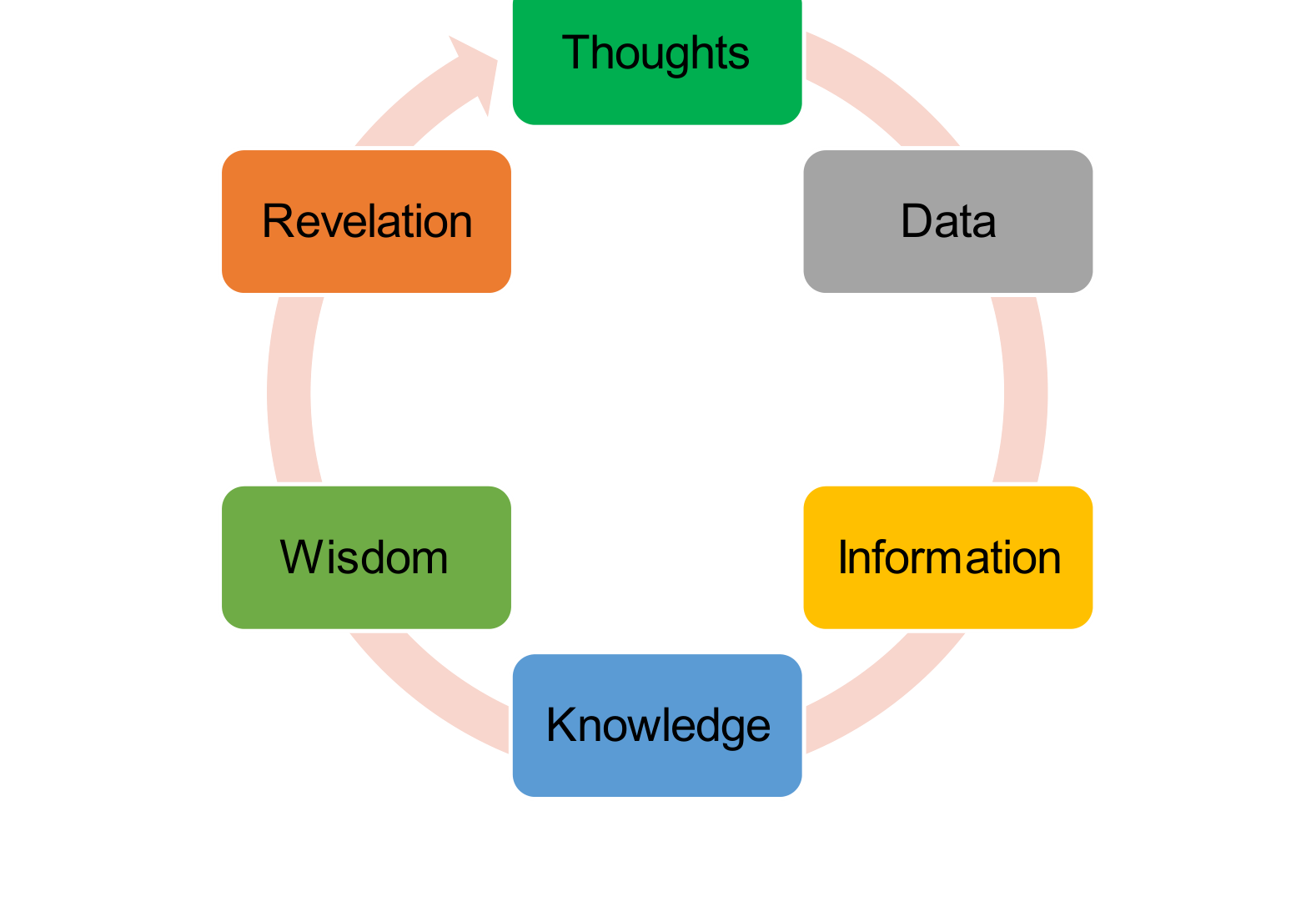
The cyclic mode of thinking in Figure 7 extends the previous hierarchy which starts from data to wisdom. Here, a model which starts with thoughts as analogous to the cellular level in biology and revelation as analogous to emergence level. Thoughts create data, whether in verbal forms, sounds, images, drawings, etc. Arrangement of data creates information. Organised information creates knowledge whilst the rightful application of knowledge is a state of wisdom. Unlike knowledge, wisdom draws from explicit and tacit knowledge, experiences and skills to establish a systemic balance of diverse domains of a system and its environments to evidence wisdom. Wisdom can be understood because it is embedded in knowledge. Revelation is at the level of intuition, and it may involve generating data from thought experiments using principles of polarity and combining the results of the thought experiments with wisdom, knowledge, information, data and thoughts to create awareness emerging from the status quo. Think of the valuable insights that can emerge from prompt engineering of LLM to output new and emergent knowledge or concept or insights. Apart from intuitions, predictions within the context of VUCA (volatility, uncertainties, complexity and ambiguity) can be classified at the level of revelational knowledge. Although revelation appears to be associated with religion and spirituality, the proposed model posits that the mechanisms of revelation sit above wisdom. The mind is like a supercomputer with hidden computational processes. Consider the cognitive activity required to walk 3 miles to a Supermarket and buy five items and return home. Should you use e-commerce from home and avoid risks on the road and waste time; or take a walk to improve your health. Think about your thoughts as you decide and “see” how you are executing permutations and combinations to decide, plan actions, take actions and control your actions and environments.
9. Conclusions
In this research, a mechatronic-based spinner for generating randomness of the seven Questelligence domains was designed, developed, optimized, prototyped and tested. The purpose was to concretise domain-based thinking. LADRP methodology was used to realise the prototype using design thinking and additive manufacturing. Pugh Matrix was useful in down-selecting the conceptual design while the Morphology Matrix facilitated decision-making on the composition of the electronic subsystem. FMEA was used to improve the structural design to mitigate risks associated with efficient functioning of the Mechatronic Spinner. The case study showed that the Mechatronic Spinner can generate random numbers which is very crucial in advancing the theory and practice of domain-based systems thinking for cognitive activities such as gamification, problem-solving, storytelling and teaching and learning. In this study, LLMs are considered as artificial mind as they perform permutation and combinations of datasets to create meaning like human mind. The significance of the study is in advancing thinking as a deterministic mathematical process could enhance co-creativity, co-analysis and co-reflections by humans and human-LLM fusion.
Author Contributions
Conceptualization, CO.; methodology, CR.; software, CR.; validation, CO and CR; formal analysis, CR.; investigation, CR.; resources, CO.; data curation, CR.; writing—original draft preparation, CR.; writing—review and editing, C.; visualization, CR; supervision, CO.; project administration, CR.; funding acquisition, NA. All authors have read and agreed to the published version of the manuscript.
Funding
This research received no external funding.
Data Availability Statement
NA
Acknowledgments
Thank you to the following staff at Loughborough University for their support to the project: Hussam Fraij, Peter Godfrey, Brijesh Gurav, Mark Capers and Tom Partington. The use of ChatGPT (https://openai.com/index/chatgpt/) to optimise codes generated is acknowledged.
Conflicts of Interest
The authors declare no conflicts of interest.
References
- Ogbonnaya, C. Domain-Based Systems and Systematic Thinking; KDP Publishing: Great Britain, 2024.
- Jeffries, K.K. Skills for Creativity in Games Design. Design Studies 2011, 32, 60–85, doi:10.1016/j.destud.2010.07.001.
- Ratinho, E.; Martins, C. The Role of Gamified Learning Strategies in Student’s Motivation in High School and Higher Education: A Systematic Review. Heliyon 2023, 9, e19033, doi:10.1016/j.heliyon.2023.e19033.
- Sailer, M.; Sailer, M. Gamification of In-class Activities in Flipped Classroom Lectures. British Journal of Educational Technology 2021, 52, 75–90, doi:10.1111/bjet.12948.
- Aslaksen, E.W. Systems Engineering and System Specifications. Journal of Electrical and Electronics Engineering, Australia 1987, 7, 159–165.
- Ogbonnaya, C. Thinking, Knowing, Doing and Being; KDP Publishing: Great Britain, 2021; ISBN 979-8770636871.
- Dauer, J.M.; Sorensen, A.E.; Jimenez, P.C. Using Structured Decision-Making in the Classroom to Promote Information Literacy in the Context of Decision-Making. Journal of College Science Teaching 2022, 51, 75–82, doi:10.1080/0047231X.2022.12315652.
- Boom-Cárcamo, E.; Buelvas-Gutiérrez, L.; Acosta-Oñate, L.; Boom-Cárcamo, D. Gamification and Problem-Based Learning (PBL): Development of Creativity in the Teaching-Learning Process of Mathematics in University Students. Thinking Skills and Creativity 2024, 53, 101614, doi:10.1016/j.tsc.2024.101614.
- Erümit, S.F.; Yılmaz, T.K. The Happy Association of Game and Gamification: The Use and Evaluation of Game Elements with Game-Based Activities. Technology, Pedagogy and Education 2022, 31, 103–121, doi:10.1080/1475939X.2021.2006077.
- Khoshnoodifar, M.; Ashouri, A.; Taheri, M. Effectiveness of Gamification in Enhancing Learning and Attitudes: A Study of Statistics Education for Health School Students. Journal of Advances in Medical Education and Professionalism 2023, 11, 230–239, doi:10.30476/jamp.2023.98953.1817.
- Wang, C.-C.; Chang, S.-C.; Yu, Y.H. Using Gamification to Enhance Learning: A College Course Case Study. Entertainment Computing 2025, 54, 100942, doi:10.1016/j.entcom.2025.100942.
- Zeng, J.; Sun, D.; Looi, C.; Fan, A.C.W. Exploring the Impact of Gamification on Students’ Academic Performance: A Comprehensive Meta-analysis of Studies from the Year 2008 to 2023. British Journal of Educational Technology 2024, 55, 2478–2502, doi:10.1111/bjet.13471.
- Arias-Carrión, Ó.; Pöppel, E. Dopamine, Learning, and Reward-Seeking Behavior. Acta Neurobiologiae Experimentalis 2007, 67, 481–488, doi:10.55782/ane-2007-1664.
- Skok, K. Niepewność w Grach – Potencjalne Korzyści i Straty. Homo Ludens 2019, 37–54, doi:10.14746/hl.2019.12.2.
- Ozcelik, E.; Cagiltay, N.E.; Ozcelik, N.S. The Effect of Uncertainty on Learning in Game-like Environments. Computers & Education 2013, 67, 12–20, doi:10.1016/j.compedu.2013.02.009.
- Howard-Jones, P.A.; Demetriou, S. Uncertainty and Engagement with Learning Games. Instructional Science 2009, 37, 519–536, doi:10.1007/s11251-008-9073-6.
- Wilson, A.C. Development and Validation of the Conversation Questionnaire: A Psychometric Measure of Communication Challenges Generated from the Self-Reports of Autistic People. Autism & Developmental Language Impairments 2022, 7, doi:10.1177/23969415221123286.
- Asbell-Clarke, J.; Dahlstrom-Hakki, I.; Voiklis, J.; Attaway, B.; Barchas-Lichtenstein, J.; Edwards, T.; Bardar, E.; Robillard, T.; Paulson, K.; Grover, S.; et al. Including Neurodiversity in Computational Thinking. Frontiers in Education 2024, 9, doi:10.3389/feduc.2024.1358492.
- Habraken, N.J.; Gross, M.D. Concept Design Games. Design Studies 1988, 9, 150–158, doi:10.1016/0142-694X(88)90044-0.
- Santos, L.V. da S.; Guillaumon, S.; Dantas, M.M. Teaching and Learning Creativity in Management: Literature Review and a Research Agenda. Thinking Skills and Creativity 2025, 56, 101737, doi:10.1016/j.tsc.2024.101737.
- Ogbonnaya, C. LEAN and AGILE SERVICES: Inspiring Service Industry Change Through Story: The Lean Thinking Way.; KDP Publishing: Great Britain, 2023.
- Kelley, D.; Brown, T. An Introduction to Design Thinking. Institute of Design at Stanford 2018, 6.
- Isermann, R. Mechatronic Systems: Fundamentals; 1st ed.; Springer: Berlin, 2005; ISBN 1852339306.
- Buur, J. The Mechatronics Design Process. Mechatronic Design in Textile Engineering 1995, 27–32, doi:10.1007/978-94-011-0225-4_2.
- 700, B.D. Different Types of Motors and Their Use. Available online: https://www.rs-online.com/designspark/different-types-of-motors-and-their-use.
- Sass, L.; Oxman, R. Materializing Design: The Implications of Rapid Prototyping in Digital Design. Design Studies 2006, 27, 325–355, doi:10.1016/j.destud.2005.11.009.
- Hülagü, R.; Timur, Ş. Using Morphological Chart for Analysing Existing Designs. Archives of Design Research 2024, 37, 27–41, doi:10.15187/adr.2024.02.37.1.27.
- Ogbonnaya, C.; Abeykoon, C.; Nasser, A.; Ume, C.S.; Damo, U.M.; Turan, A. Engineering Risk Assessment of Photovoltaic-Thermal-Fuel Cell System Using Classical Failure Modes, Effects and Criticality Analyses. Cleaner Environmental Systems 2021, 2, 100021, doi:10.1016/j.cesys.2021.100021.
- Higbee, S.; Miller, S. Finite Element Analysis as an Iterative Design Tool for Students in an Introductory Biomechanics Course. Journal of Biomechanical Engineering 2021, 143, doi:10.1115/1.4051659.
- Code With Conner; YouTube, 2025.
- Control a DC Motor with an Arduino; YouTube.
- Tang, P.; Zhao, X.; Shi, H.; Hu, B.; Ding, J.; Yang, B.; Xu, W. A Review of Multi-Axis Additive Manufacturing: Potential, Opportunity and Challenge. Additive Manufacturing 2024, 83, 104075, doi:10.1016/j.addma.2024.104075.
- Wirth, D.M.; Li, C.C.; Pokorski, J.K.; Taylor, H.K.; Shusteff, M. Fundamental Scaling Relationships in Additive Manufacturing and Their Implications for Future Manufacturing and Bio-Manufacturing Systems. Additive Manufacturing 2024, 84, 104081, doi:10.1016/j.addma.2024.104081.
- Knez, I.; Niedenthal, S. Lighting in Digital Game Worlds: Effects on Affect and Play Performance. CyberPsychology & Behavior 2008, 11, 129–137, doi:10.1089/cpb.2007.0006.
- Gu, Y. The Impact of Color on Players in Human-Machine Interaction in Games. Applied and Computational Engineering 2023, 8, 859–863, doi:10.54254/2755-2721/8/20230130.
- Xia, G.; Henry, P.; Li, M.; Queiroz, F.; Westland, S.; Yu, L. A Comparative Study of Colour Effects on Cognitive Performance in Real-World and VR Environments. Brain Sciences 2021, 12, 31, doi:10.3390/brainsci12010031.
- Balakrishnan, N.; Voinov, V.; Nikulin, M.S. Chi-Squared Goodness of Fit Tests with Applications; Elsevier, 2013; ISBN 9780123971944.
How to cite this article
Cite this article
APA style shown. Use “Cite” for MLA, Chicago, IEEE, BibTeX and RIS formats.
Metrics
1,147
Article views
127
PDF downloads