Call for Papers: Special Issue
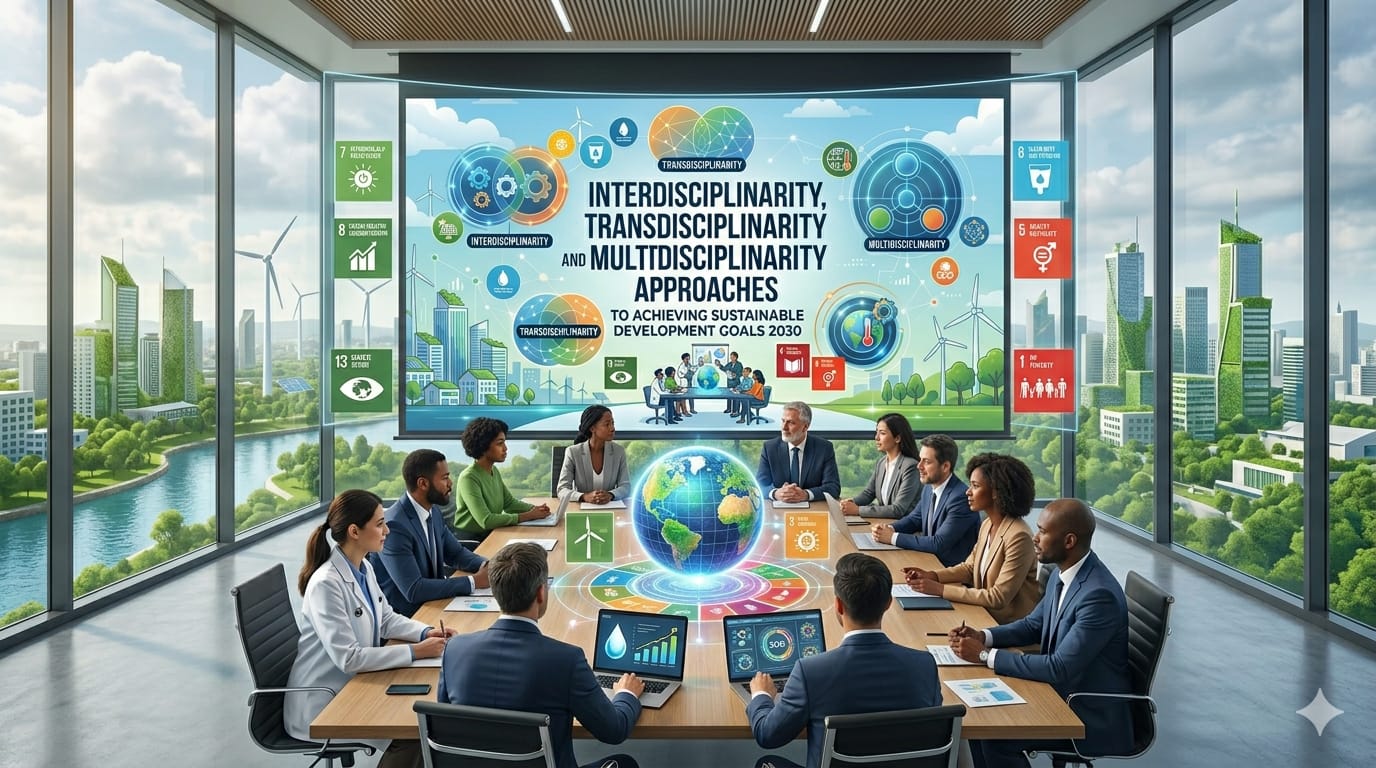
Interdisciplinary, Transdisciplinary and Multidisciplinary Pathways to Achieving the Sustainable Development Goals (SDGs) by 2030
Dear Colleagues,
The global pursuit of the United Nations Sustainable Development Goals (SDGs) has entered a decisive decade—defined by urgency, complexity, and the need for unprecedented collaboration across diverse knowledge systems. As societies confront interconnected challenges such as climate change, inequality, food insecurity, biodiversity loss, energy poverty, human rights concerns, and rapid technological transformation, it has become increasingly evident that no single discipline, sector, or nation can provide adequate solutions in isolation.
Achieving the SDGs by 2030 therefore requires systems-thinking approaches that transcend disciplinary boundaries, integrate diverse forms of knowledge, and mobilise collective intelligence at scale.
Overview
This Special Issue brings together cutting-edge scholarship and practice at the intersection of interdisciplinarity, transdisciplinarity, and multidisciplinarity—three complementary approaches that offer a robust framework for addressing complex global challenges.
- Interdisciplinary: Integrates theories and methods across disciplines to generate holistic insights.
- Multidisciplinary: Combines parallel contributions from different disciplines.
- Transdisciplinary: Co-creates knowledge with stakeholders beyond academia.
Scope and Objectives
- Accelerate progress toward the SDGs
- Strengthen collaborative governance and decision-making
- Integrate indigenous and local knowledge systems
- Advance innovation in education, policy, and technology
- Promote inclusive and resilient development pathways
Topics of Interest
We invite submissions addressing two or more SDGs through interdisciplinary perspectives.
Example: How Affordable and Clean Energy (SDG 7) can enhance Quality Education (SDG 4), improve Health and Well-being (SDG 3), and support Climate Action (SDG 13).
- No Poverty
- Zero Hunger
- Good Health and Well-being
- Quality Education
- Gender Equality
- Clean Water and Sanitation
- Affordable and Clean Energy
- Decent Work and Economic Growth
- Industry, Innovation and Infrastructure
- Reduced Inequalities
- Sustainable Cities and Communities
- Responsible Consumption and Production
- Climate Action
- Life Below Water
- Life on Land
- Peace, Justice and Strong Institutions
- Partnerships for the Goals
Types of Submissions
- Original Research Articles
- Review Papers
- Short Communications
- Brief Reports
Submission Guidelines
- Submit online via: https://www.dapresses.com
- Single-blind peer review process
- Follow journal templates:
- Dialogic STEM Journal (STEM fields)
- Dialogic Society Journal (Social Sciences & Humanities)
- Optional abstract pre-assessment by editorial office
Publication Information
- Rolling publication of accepted papers
- Published under Special Issue collections
- Hosted in Dialogic STEM Journal and Dialogic Society Journal
- Open access and peer reviewed
Article Processing Charge (APC)
- NGN 100,000
- £300 / $300 / €300
- Optional editing and language support available
Keywords
Sustainable Development, Energy, Education, Health, Artificial Intelligence, Governance, Environment, Systems Thinking, Law, Innovation (5–7 keywords required)
Why Publish in This Special Issue?
- SDG-focused global visibility
- Open access citation advantage
- Interdisciplinary collaboration opportunities
- Global promotion via DAPresses platforms
Editorial Team
- Professor Akindele Okedoye
- Professor Christopher Nwankwo
- Professor Gbenga Onabamiro
- Dr. Chukwuma Ogbonnaya
- Dr. Waheed Akande
- Dr. Perpetual Eze-Idehen
- Dr. Mfom Charles
- Dr. Jessica Lenka
- Dr. Atieme Joseph Ogbolosingha
- Dr. Alli Kazeem
- Dr. Lukman S. Yusuf
- Dr. Hanga Khadijah Muzzammi
Submission Deadline
30 December 2026
Submission Email: info@dialogicsl.com
Final Note
This Special Issue invites scholars, practitioners, and policymakers to rethink how knowledge is produced, integrated, and applied in addressing global sustainability challenges. Achieving the SDGs by 2030 is not only a technical endeavour but a deeply collaborative and interdisciplinary mission.
We look forward to receiving your contributions.