
The Application of Heuristic Reasoning in the Risk Analysis of Unforeseen Risk Events in Construction Projects in Nigeria
1
- 1Department of Quantity Surveying, Faculty of Environmental Technology, Abubakar Tafawa Balewa University, Dass Road, Bauchi, Bauchi State, Nigeria.
https://doi.org/10.66845/dstem.2026.00006
Cite this article
Related Articles
Measuring Human Mycotoxins Exposure Using Biomarkers - A Review
Ukpai Eze
Dialogic STEM Journal · 2026
ArticleClimate Change Resilience and Adaptation Pathways for Africa’s Agricultural Sector
Francis Bisong, Asuquo Okon, Ekaba Bisong and Jackson Akor
Dialogic STEM Journal · 2026
ArticleDesign, Prototyping and Testing of Mechatronic Spinner for Domain-Based Systems Thinking
Chukwuma Ogbonnaya and Chagary Ranjan
Dialogic STEM Journal · 2026
ArticleDynamic Differential Games of Nuclear Proliferation and Preemption under Uncertainty
Innocent Adinebo Katule and Akindele Michael Okedoye
Dialogic STEM Journal · 2026
Contents
Abstract
Heuristic reasoning is used to deduce Fuzzy Decision Variables that could give rise to unforeseen risk in a proposed construction project for a selected client. The case study of some selected projects was undertaken to determine the sources of unforeseen risks in the domain and deduce the impact of the unforeseen risks that could occur in the domain of projects. Fuzzy set analysis was utilized to calculate the likely impact of the risk of unknown unknown. The work items which were unforeseen in the projects included additional foundations, burglar-proofing to windows, omission of work items, additional fixtures, builder’s work, additional external works, additional electrical installations, and additional mechanical installations. The likely consequence of the occurrence of the risk of unknown unknown in a domain could be estimated as a fuzzy number. The magnitude of the likely consequence could be obtained by converting the fuzzy value into a crisp value. The concept of Fuzzy Decision variables could be utilized in the identification of events that could lead to unforeseen risk; and fuzzy set analysis could be used to estimate the impact of the risk due to unforeseen events.
Keywords
Full text
Reading view1. Introduction
Risk is inherent in construction projects. Risk management requires the identification and quantification of risks. Flanagan and Norman [1] argued that forecasting the future is possible by considering that what has happened in the past could happen in the future if the same conditions that precipitated the past events present themselves again in the future. According to the Project Management Institute [2], risk is “an uncertain event or condition that, if it occurs will have either a positive or negative effect on one or more project objectives”. The construction industry is besotted with different scenarios that constitute many unpredictable, uncertain and unforeseen occurrences [3]. Keshk et al [4] emphasized the need to be proactive in undertaking risk management for proposed construction projects and to maintain such perspective throughout the tenure of the project.
The concept of Fuzzy Decision Variable (FDV) was utilized by Ibrahim [5] in predicting the occurrence of risks in construction projects. An FDV for a risk connotes a particular disposition in a risk environment that predisposes the occurrence of a certain risk Bala and Yakubu [6]. An FDV is derived by canvassing through project information such as drawings, bills of quantities, and specifications to determine the likelihood of the occurrence of a particular risk. Ibrahim [5] and Ibrahim [7] utilized FDVs to carry out the risk analysis of construction projects. The Reason’s model of organizational accident could be used to portray the nature of FDVs.
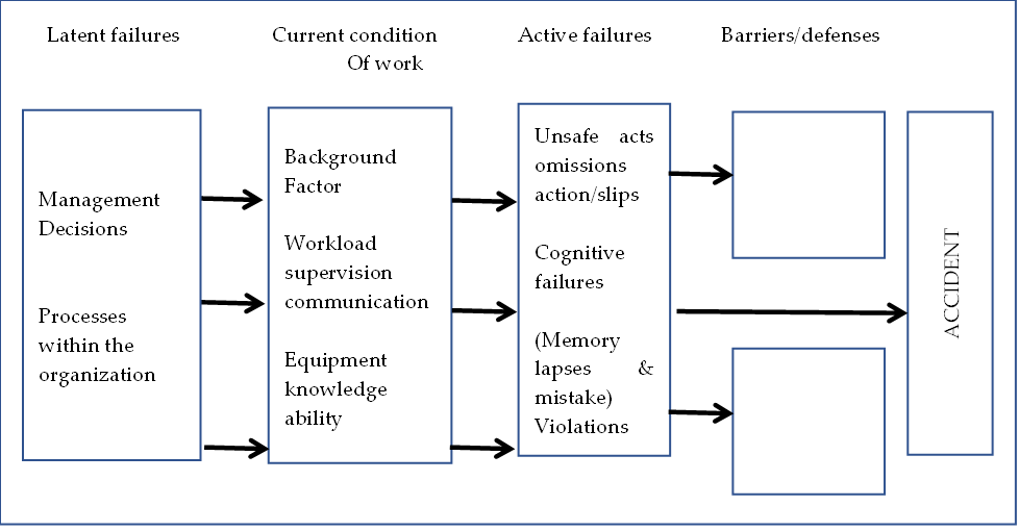
Figure 1 Reason’s model of organizational accidents (Source: Reason [8])
The purpose of the model is to represent the scenario when an accident occurs; including the defenses put up to prevent such accidents and the active failures that cause the accidents. In the process of making decisions, human beings must utilize certain skills. According to Dewhurst and Gwinnet [9], logical deduction applies principles based upon mathematical models or propositional logic as a technique in decision-making. Reasoning has been modelled by Polya [10] based upon the rule:
IF A THEN B
The pattern defined by the model could be used in an argument. Sometimes, more than one symptom could persist in a situation. The rule then becomes:
A=> B1, B2, Bn
Evidence of a single symptom Bi tells little about A. However, a plausible line of reasoning is Hart [11]:
“B3 is true. I also know that B1 and B2 are true, and that B3 is different from them so this makes A more credible”
The various symptoms that foretell the existence of a condition could be construed as heuristics. A heuristic is information acquired by experience which can be applied to decisions in future situations which are similar, but not quite the same. Experts and ordinary laymen utilize heuristics to make estimates about certain events; rather than compute such estimates statistically Slatter [12]. Production rules are used to elicit decisions. According to Siler [13], a set of rules are utilized in the development of knowledge-based systems. Such rules are of the type:
IF (certain patterns are present in the data)
THEN (execute certain actions; including altering data or confirming new data)
Fuzzy Decision Variables are established in a particular domain of projects by the articulation of certain events that are indicators of particular FDVs [5]. When a new project is proposed in that domain, the project characteristics of the proposed project would be matched with the indicators of these FDVs previously stored in a database. A match between these project characteristics with the indicators would announce the possibility of the existence of the relevant FDVs. The project characteristics would be confirmed by the perusal of project documents such as architectural drawings, engineering designs, and bills of quantities. Figure 1 illustrates the typical workflow process of establishing the prevalence of FDVs in the analysis of new projects.
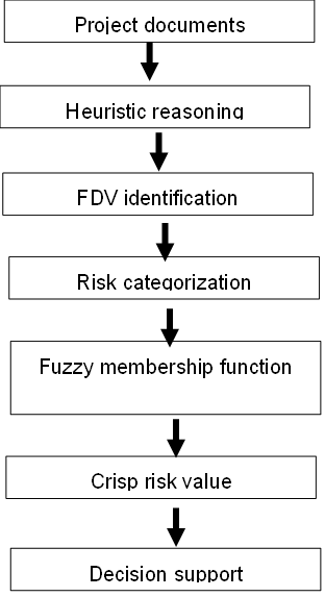
Figure 1. Workflow of heuristic reasoning and fuzzy risk evaluation framework Flow
Risk manifest in its consequence. Hence the difference between initial contract sum and the final contract could occur as a result of the occurrence of risk. This difference must be investigated to identify the FDVs that cause the risks that result into a difference between the initial contract sum and the final contract sum. According to Goble [14], structured system analysis involves “taking the problem area in the most general form and then refining it in a structured and systematic manner until the finest levels of details are obtained. In the final account preparation, the adjustment of the contract sum is executed under the following headings:
- Variations
- Remeasurement of provisional quantities
- Nominated subcontractors’ accounts
- Nominated suppliers’ accounts
- Loss and expense caused by disturbances of regular progress of the works
- Fluctuation in rates of labor and prices of materials
Unforeseen Conditions connote latent and adverse conditions present in a project or on a project site that were not known to the contractor at the time of contract. Smith et al [15] categorized risk into three categories: known risks, known unknowns and unknown unknowns. The frequency and effects of known risks are known. In known unknown, either the effect or frequency is known. In unknown unknowns, both the effects and probability are unknown. Kim [16] has proposed that the unknown unknowns are not truly unknown unknowns; that it is possible to identify the unknown unknowns and subsequently convert them to known unknowns. This could be done by classifying risk events by identification and certainty as illustrated in Table 1.
Table 1: Categorization by identification and certainty (Source: Kim [16])
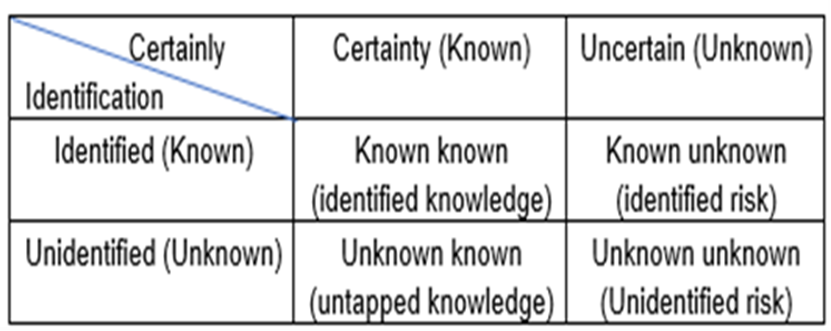
Khosravi and Bin Mohammed [17] characterized unexpected events as being unpredictable, uncontrollable, and having serious impact on the construction projects. Reasons for the occurrence of unforeseen events include human involvement, excessive cost of projects, environmental causes, unique projects, and long construction periods with associated complex processes. Contractors routinely find substructure conditions that have been foreseen Examples include the occurrence of ground water, presence of utilities pipes and electrical cables, and rocky material. lying beneath the surface of earth. Such findings could cause substantial impact on project schedule and costs.
Some standard conditions of contract recognize the possibility of unexpected events occurring in the course of carrying-out the project and prescribe appropriate course of action to take. According to the FIDIC Conditions of Contract for Construction [18], unforeseeable physical conditions could arise during the execution of the Works. These physical conditions could adversely affect the progress of the Works and/or add to the cost of the project. Physical conditions are “natural physical conditions and physical obstructions (natural or man-made) and pollutants, which the Contractor encounters at the Site during execution of the Works, including sub-surface and hydrological conditions but excluding climatic conditions at the Site and the effects of those climatic conditions”. Clause 4.12 of the FIDIC Conditions of Contract stipulates that the contractor shall notify the engineer who will assess the conditions and give instructions towards the conditions. The contractor shall then be reimbursed for any consequential delays or costs that might arise.
The JCT Standard Building Contract with Quantities 2016, JCT SBC/Q [19] does not specifically mention unforeseen conditions. However, its variation clause 5.1.1 defines the term variation as “the alteration or modification of the design, quality or quantity of the Works. This includes:
“1. the addition, omission or substitution of any work;
2. the alteration of the kind or standard of any of the materials or goods to be used in the
Works;
3. the removal from the site of any work executed or Site Materials other than work,
materials or goods which are not in accordance with this Contract;”
Clause 5.1.1 could be used to compensate the contractor for losses and expenses that arise from unforeseen events that are not due to negligence on the part of the contractor.
Bai and Bukhanenko [20] suggested a need for a systematic approach towards risk management that encompasses innovative technologies with their attendant beneficial effects. Rule-based logic and fuzzy logic have been applied in the development of industrial control systems, creation of complex models, and fuzzy knowledge-based systems [21]. Kaoutar and Lahcen [22] proposed a framework comprising of stakeholder analysis, Fuzzy Analytic Hierarchy Process (FAHP), and the elimination and choice translating reality method in fuzzy Multi-Criteria Decision Analysis (MCDA) to carry-out the environmental impact assessment of risk. Fikri and Ibrahim [23] developed a conceptual framework that presents risk list and their ranking for planning large-scale transportation projects. Generally, in contemporary artificial intelligence research, it is expedient to construct new paradigms based on existing theories rather than create new theories, substantiate claims on robust theorems or concrete experimental evidence, and articulate the utility of real-life applications as against petty similitudes [24]. Ibrahim [5] and Ibrahim [7] proposed a fuzzy risk analysis model that encompasses rule-based reasoning and fuzzy analysis. This study utilizes heuristic rule- based reasoning and fuzzy analysis specifically in the prediction of the occurrences of unforeseen risk in construction projects. The aim of the study is to utilize heuristic reasoning in the risk analysis of building construction projects in a selected domain. The objectives of the study are as follows:
- To identify the sources of unforeseen risks that cause financial impacts on construction projects
- To identify the Fuzzy Decision Variables that give rise to these risks
- To assess the likely magnitudes of the consequences of the Fuzzy Decision Variables
2. Research Methodology
3.1 Details of Projects
It is expedient to demarcate the domain for which the study was undertaken. The projects analyzed were undertaken by an institutional client that procures construction projects for its physical facilities. According to Smith et al. [15], every project domain is governed by its risk characteristics such as risk types, risk frequencies, and risk magnitudes which reflect the client’s risk attitude, risk policy, and risk strategy. Consequently, it is envisaged that the projects selected for the study bear the same risk characteristics since they have all been executed in the same domain. The details of the project are highlighted in table 2 below.
Table 2: Descriptive summary of the five construction projects used for FDV calibration
|
Project ID |
Project Type |
Location |
Initial Contract Sum (N) |
Final Contract Sum (N) |
Percentage Variation in Contract sum (%) |
Contract Period (weeks) |
|
I |
Lecture Theatre |
Bauchi |
4, 356, 633, 00 |
7, 241, 135.86 |
+66.20 |
65 |
|
II |
Library |
Bauchi |
2, 826, 140.00 |
3, 941, 526.90 |
+39.47 |
56 |
|
III |
Block of Offices |
Bauchi |
34, 489, 351.75 |
48, 072, 024.48 |
+39.38 |
50 |
|
IV |
Hostel |
Bauchi |
10, 343, 707.94 |
10, 908, 487.20 |
+5.46 |
53 |
|
V |
Hostel |
Bauchi |
31, 159, 672.50 |
37, 095, 629.52 |
+19.05 |
58 |
3.2 Identification of the Risk of Unknown unknown
An FDV is a variable that is measured by its intensity or concentration. The concentration indicates the likelihood of occurrence of the FDV. Keller [25] has argued that experts derive their decision-making capability based upon the large number of heuristics they have accumulated in a particular domain. According to Smith [15], risk can be classified in three broad groups: known risks, known unknowns, and unknown unknown. Known risks occur regularly and they include changes in productivity levels and costs of materials. Known unknowns are predictable risks whose probability of occurrence or impact of occurrence could be measured. The risk of unknown unknown is unpredictable; as its likelihood and extent of impact cannot be ascertained.
It is useful to define the FDV of the unknown unknown as an unknown latent condition that cannot be defined, nor identified and is not estimable in terms of effect; yet it could cause significant adjustment in the contract sum [5]. A provisional sum has been defined as a sum provided for a cost which cannot be entirely foreseen, defined or detailed at the time of tendering [26]. Consequently, an FDV that results in the adjustment of provisional sums is the FDV for the risk of the known unknown and unknown unknown [5]. In the classification of risks, Figure 2 shows taxonomy with respect to the extent of uncertainty associated with the risk. The final contract sum increased over the initial contract sum by 19.05%. Table 3 gives the cost constituents of the final contract sum.
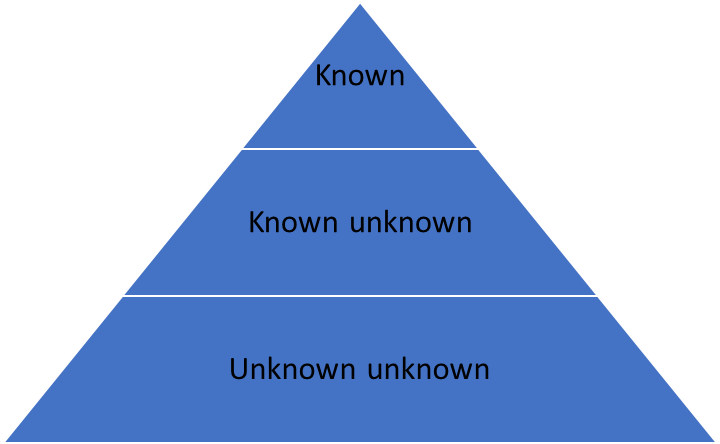
Figure 2. Conceptual framework for classifying construction risks into known risks, known unknowns, and unknown unknowns
Table3. Breakdown of final contract sum
|
S/no. |
Description |
Percentage difference in contract sum caused by item (%) |
|
1. |
Adjustment of PC sum |
+3.46 |
|
2. |
Adjustment of provisional sums |
-5.49 |
|
3. |
Variations |
+3.41 |
|
4. |
Remeasurement |
-2.70 |
|
5. |
Fluctuations |
+20.37 |
|
Total percentage difference in contract sums |
+19.05 |
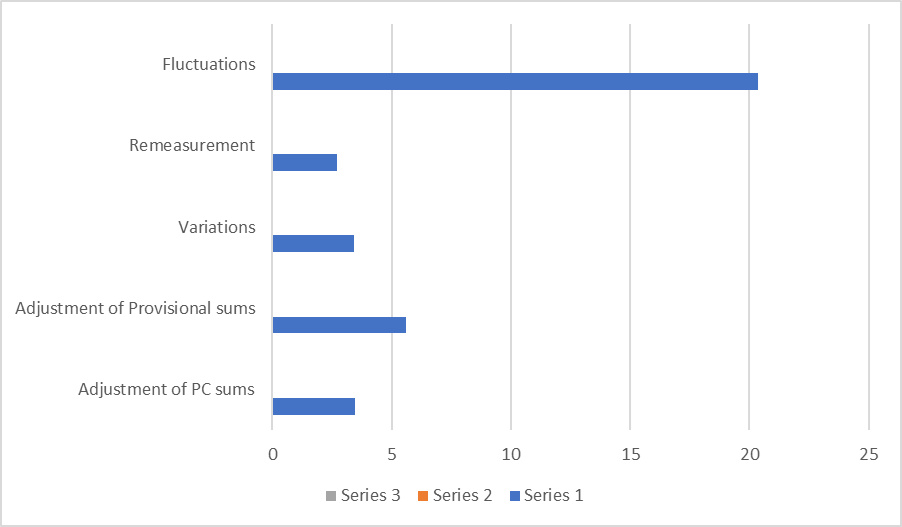
Figure 3 Percentage contribution of cost adjustment components to final contract sum variation
The initial contract sum has been decreased by -5.49% as a result of the adjustment of the Provisional sums.
Table 4 lists the items of work covered by provisional sums and the cost effects of the on the initial contract sum.
Table 4. Items of work covered by provisional sums and the cost effects of the on the initial contract sum
|
S/no |
Description |
Percentage contribution of item to total provisional sum (%) |
Percentage difference in contract sum caused by item (%) |
|
1. |
Additional foundations |
13.08% |
-0.80% |
|
2. |
Burglar-proofing |
2.17% |
+0.12% |
|
3. |
Contingencies |
83.85% |
-4.81% |
|
Net difference to the initial contract sum caused by total provisional sums |
-5.49 |
To elicit the FDV, the risk event that leads to the development of the FDV is highlighted in Table 5 together with the magnitudes of the risk consequence associated with the risk events.
Table 5: Mapping of observed unforeseen events to corresponding fuzzy Decision Variables
|
Risk event |
Observed cause |
FDV Type |
Type of Risk |
Impact on contract sum caused by risk event (%) |
|
Additional foundations |
Subsurface anomaly |
Unknown unknown |
Cost |
0.80 |
|
Burglar-proofing |
Security redesign |
Known unknown |
Cost |
0.12 |
|
Contingencies |
Unforeseen events |
Unknown unknown |
Cost |
4.81 |
Consequently, the FDV of unknown unknown had precipitated a decrease of 0.80% + 4.81% = 5.61% to the initial contract sum. The FDV of known unknown contributed to an increase of 0.12% to the initial contract sum. Hence, the net difference to the contract sum is 5.61% – 0.12% = 5.49%. This means the FDV of unknown precipitated a decrease of 5.49%.
3.3 Evaluation of the Magnitude of the Risk of Unknown unknown
For the purpose of evaluating the consequences of risk, fuzzy set analysis is utilized. Fuzzy set analysis is used in evaluating the impact of the risk. According to Borgardi and Bardossy [27] fuzzy set analysis could be applied situations where the data available is not probabilistic. Fuzzy set analysis is used in estimating where there is insufficiency of data [28]; since it uses human judgment, rather than probabilistic reasoning. In Nigeria, paucity of construction data makes fuzzy set analysis a feasible method of estimating impact of risks. Most real-life decisions are made by experts using data that could be inadequate [25]. The concept of fuzzy sets denotes partial membership of sets to represent partial truth or falseness [29]. Membership values are shown by a value on the range [0.0, 1.0], with 0.0 indicating absolute non-membership and 1.0 representing absolute membership [30].
The fuzzy analysis of a variable could be carried out using five samples of a variable [28]. Fuzzy set analysis could be used in scenarios where data is adequate in quantity. Lee et al [31] have shown that the total net loss, T, can be assessed as a fuzzy number labelled with two values, Th=0 and Th=1, with the membership functions:
µ(T) = 1, α < T < β (1)
µ (T) = (T-A)/ (α-A), A<=T< β (2)
µ (T) = (T-B)/ (β-B), β <=T<=B (3)
µ (I) = 0, otherwise (4)
where A = the lower-bound value of the Th=0
and B = the upper-bound value of the Th=0;
and α = the lower-bound values of Th=1
and β= the upper-bound value of Th=1.
These variables are highlighted in figure 4 showing the trapezoidal fuzzy membership function.
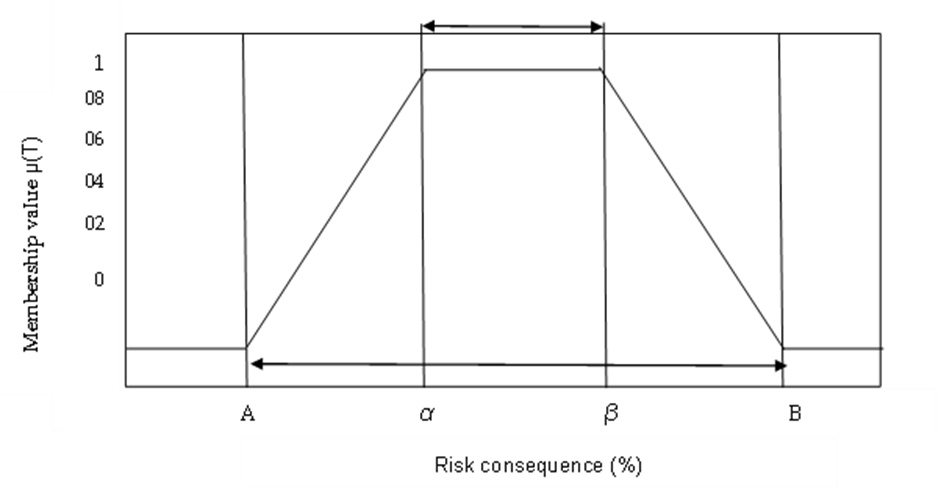
Figure 4. Trapezoidal fuzzy membership function for unknown-unknown risk consequence
Chen [32] has developed a ranking method converts a fuzzy number T can into a crisp value (RC):
RC = (V1+V2)/2(W1+W2) (5)
with V1, V2, W1 and W2 being subjects of the formulae:
V1 = B3 (B+3α – 3A) – B2 (4αA + βA + αβ) (6)
V2 = A3 (3B - 3β – A) + A2 (4βB + αB + αβ) (7)
W1 = B2 (2B – 7A + β +2α) 3(AB) (β – α) (8)
W2 = A2 (7B – 2A - 2β + α) – (αβ) (B-A) (9)
For the purpose of calculating the quantitative values of risks, membership functions would be defined for each FDV in accordance to equations (1) to (4). To undertake these computations, the most likely interval and the largest likely interval, with each interval defined by its lower and upper bound values, must be determined. Since five values of data are sufficient for fuzzy set analysis, the most likely interval is the range that lies around the average of the five values of the variable. The largest likely interval is the range that lies between the maximum and the minimum values of the data. To determine the impact of the risk, the magnitudes of the impact of all the FDVs, calculated as crisp values for all the identified FDVs, would be summed-up.
Five projects were analyzed to determine the values of the consequences of the Unknown unknown FDV. The lower bound value and upper bound values of largest likely interval and the most likely interval were obtained for the purpose of calculating the RC value of the FDV of the unknown unknown utilizing equations (5) to (9). Table 6 shows the percentage differences to the initial contract caused by each FDV of the Unknown unknown in all the five projects.
Table 6. The FDV of Unknown unknown and their percentage adjustment to the initial contract sums of the five projects
|
Fuzzy Decision Variable |
Percentage difference to the initial contract sum in Project I (%) |
Percentage difference to the initial contract sum in Project II (%) |
Percentage difference to the initial contract sums in Project III (%) |
Percentage difference to the initial contract sum in Project IV (%) |
Percentage difference to the initial contract sum in Project V(%) |
Average absolute value of percentage difference to the initial contract sum in all projects (%) |
|
Unknown unknown |
-5.00 |
+1.48 |
0.00 |
-5.39 |
-5.49 |
3.47 |
The next step is to determine the most likely interval and the largest likely interval for the FDV of the unknown unknown. The largest likely interval is given by the range between the highest value and the lowest value among the set of values obtained from the five projects. This is denoted by 0.00 to -5.49. The most likely intervals the range between the two values that surround the average of the five values. This is given by 1.48 to 5.00. Table 7 shows the bounds of the intervals.
Table 7. Membership function bounds and interval parameters for unknown-unknown risk evaluation
|
Parameter |
Meaning |
Value |
|
A |
Lower bound, largest likely interval (Th=0) |
0.00 |
|
B |
Upper bound, largest likely interval (Th=0) |
5.49 |
|
Α |
Lower bound, most likely interval (Th=1) |
1.48 |
|
Β |
Upper bound, most likely interval (Th=1) |
5.00 |
Inserting these values in equations (5) to (9) yields a crisp value of 2.52 (see table 8).
Table 8. Crisp values for the FDV of unknown unknown
|
Fuzzy Decision Variable (FDV) |
V1 |
V2 |
W1 |
W2 |
V1+V2 |
2(W1+W2) |
RC |
|
Unknown Unknown |
1,375.48 |
0.00 |
570.85 |
3.63 |
1,375.48 |
1,148.96 |
1.20 |
Consequently, a project being proposed in this domain could likely have its contract sum increased by 1.20 per cent as a result of unforeseen events
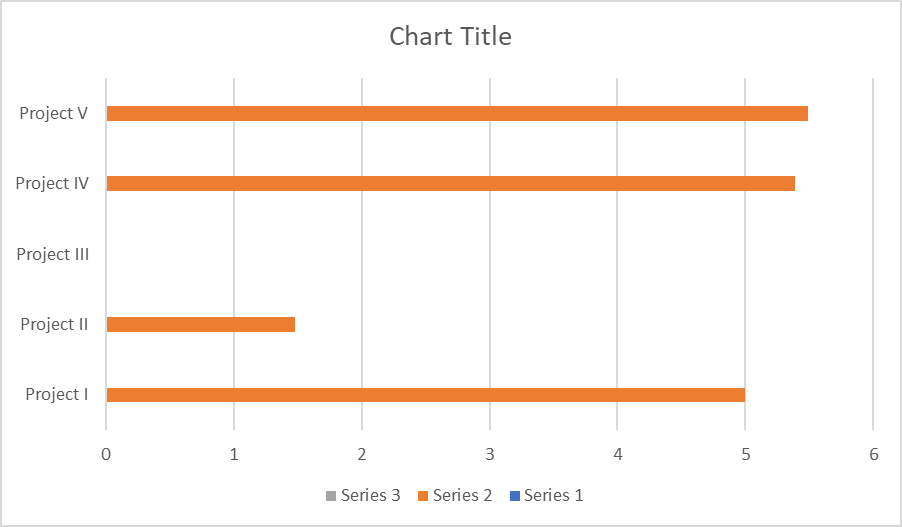
Figure 5. Comparative percentage adjustment to initial contract sums across the five projects by the risk of unknown
A line plot or column chart.
4. Validation of the Results
Sensitivity analysis was carried out by varying upper-bound value using 6.00 for the conservative estimate and 4.50 for the optimistic estimate. Table 8 shows the results of the sensitivity analysis. Blok [33] indicated the range of reasonable accuracy for estimates lie in the range minus-plus 5%. This is illustrated in Table 9.
Table 8. Sensitivity analysis of crisp risk estimates under varying interval assumptions
|
Scenario |
A |
B |
α |
β |
Crisp value (RC) |
|
Base case |
0.00 |
5.49 |
0.00 |
5.00 |
1.1.20 |
|
Conservative |
0.00 |
6.00 |
0.00 |
4.00 |
21.06 |
|
Optimistic |
0.00 |
4.50 |
0.00 |
5.00 |
20.81 |
Table 9. Estimates in the range of plus-minus 5%
|
Scenario |
Estimated |
Plus 5% |
Minus 5% |
|
Base case |
1.20 |
- |
- |
|
Conservative |
- |
1.26 |
|
|
Optimistic |
- |
1.14 |
- |
The prediction appears to be reasonable. A completed project was tested by perusing through the contract documents and establishing the Fuzzy Decision Variable for the risk of unknown unknown. The project is a lecture theatre executed by the client with an initial contract sum of N131 million naira, a contract period of 56 weeks, and a final contract sum of N161.12 million naira. The percentage difference between the initial contract sum and the final contract sum is 22.99%. the final account was analyzed to determine the actual provisional sums included in the contract sum. The following provisional sums were subtracted from the initial contract sum: Additional foundations, Burglar-proofing, Landscaping and Contingencies.
The adjustment of provisional sums caused a decrease of 4.59% in the initial contract sum as compared with the 1.2% prediction of the results calculated in the study. Sensitivity analysis has estimated approximately 21% in both conservative and optimistic scenarios. Actual results of the test project yielded 4.59% decrease. The five projects surveyed for analysis ranged between 0.00% to 5.49% (largest likely interval). Most likely interval ranged from 1.48% to 5.00%. The predicted value of 1.20% actually lies between the lower-bound largest likely interval (A=0.00) and the upper-bound of the most likely interval (5.00%) lies between the most likely interval range. The 1.20% prediction of the risk of unknown in the domain of projects appears reasonable. Risk mitigation to be considered would depend on each risk item. Table 10 shows the mitigation measure to be executed for risk FDV in the domain of projects. See Ibrahim [34] and ICE [35].
Table 10. Proposed heuristic decision rules for managing unforeseen construction risks
|
Condition |
FDV trigger |
Suggested action |
|
High contingency use |
Unknown unknown |
Increase risk allowance |
|
Site anomaly |
Latent FDV |
Conduct geotechnical test |
|
Provisional sum exceeded |
Inaccurate costing |
Improve measurement accuracy |
4. Conclusion
The Fuzzy Decision Variable of the Unknown unknown risk is undefined but its effect could be ascertained after the occurrence of the unforeseen risk. For this particular domain of projects, the Fuzzy Decision Variable of the Unknown unknown risk is indicated by the inclusion of additional foundations, burglar-proofing and contingency sum in the bills of quantities. The likely magnitude of the risk of unknown that could result from these domain characteristics could likely increase the contract sum by 1.20 per cent. Risk mitigation measures include increasing risk allowance, conducting geotechnical test, and improving measurement accuracy for the selected domain of projects.
Supplementary Materials: NA
Funding: This research received no external funding.
Data Availability Statement: NA
Acknowledgments: In the study, the author demonstrated how heuristic reasoning could be utilized in the risk analysis of a proposed construction project in a selected domain. The author bears full responsibility for this publication.
Conflicts of Interest: The author hereby declares no conflict of interest.
References
- Flanagan, R.E. and Norman, G. Risk Management and Construction; Blackwell Scientific Publications; 1993.
- Project Management Institute. A Guide to the Project Management Body of Knowledge. 4th Edition; Project Management Institute; Pennsylvania; 2008.
- Odeyinka, H.A. The Development and Variation of Models for Assessing Risk Impacts on Construction Cash Flow Forecast. PhD Thesis; Glasgow Caledonian University; Glasgow; 2003.
- Keshk, A.M.; Maarouf I. andAnnany, Y. Special Studies in Management of Construction Project Risks, Risk Concept, Plan Building, Risk Quantitative and Qualitative Analysis, Risk Response Strategies”, Alexandria Engineering Journal 2018, 57, 3179–3187, available at www.elsevier.com/locate/aej.
- Ibrahim, Y. Modeling the Risk Analysis Process for Construction Projects in Nigeria. Unpublished PhD Thesis; Department of Building; Ahmadu Bello University; Zaria; Nigeria; 2008.
- Bala, K. AND Yakubu, I. The Application of Fuzzy Decision Variables for Evaluating Risk Associated Consequences in Construction Projects. Nigerian journal of Construction Technology and Management, 2008, Vol.9(1), 42-49.
- Ibrahim, Y. The Application of Knowledge Engineering in Risk Management: Heuristic-based Reasoning in the Qualitative Risk Analysis of Proposed Construction Projects, Journal of Construction Management and Engineering 2007, Vol. 1 No.1, pp: 86-97.
- Reason, J.T. Understanding Adverse Events: Human Factors, In Vincent, C.A., Ed., Clinical Risk Management 1995, London: BMJ Publications.
- Dewhurst, F.G. and Gwinnett, E.A. Artificial Intelligence and Decision Analysis; In: Doukidis, G.I. and Paul, R.J. (Eds.); Artificial Intelligence in Operational Research; Macmillan Press; Basingtoke;1992.
- Polya, G. Mathematics and Plausible Reasoning; Vol. 2 Patterns of Plausible Inference Princetown University Press; 1969.
- Hart, A. Knowledge Acquisition for Expert Systems; McGraw-Hill Book Company;1986.
- Slatter, P.E, Building Expert Systems: Cognitive Emulation; England; Ellis Horwood Limited; 1987.
- Siler, W. Building Expert Systems. http://members.aol.com/wsiler; 2000.
- Goble, T. Sructured Systems Analysis through PROLOG; Prentice Hall International Ltd.; 1989
- Smith, N.J.; Merna, T.; and Jobling, P. Managing Risk for Construction Projects London; U.K.; Blackwell Science Ltd; 1999.
- Kim, S. D. Characterizing unknown unknowns. Paper presented at PMI® Global Congress 2012—North America 2012, Vancouver, British Columbia, Canada. Newtown Square, PA: Project Management Institute.
- Khosravi, A. and Bin Mohammed, M.A.H. Why Unexpected Events of Construction Projects Occur Despite Using Risk Management ?. Archives Des Sciences Journal 2012, Vol 65, No. 9, Pp. 57 – 75. Des. Stud. 2006, 27, 325–355, doi:10.1016/j.destud.2005.11.009.
- FIDIC. Conditions of Contract for Construction. Seventh Edition; Geneva; Switzerland; 2017.
- Joint Contract Tribunal. JCT Standard Conditions of Contract with Quantities; London: Thomas Reuters; 2016.
- Bai, S., & Bukhanenko, I. Management of project risks for construction industry enterprises. Scientia fructuosa 2025, 6 (164), 83–95, http://doi.org/10.31617/1.2025(164)06.
- Dutta, S. Knowledge Processing and Applied Artificial Intelligence; Butterworth - Heinemann Ltd;. Oxford; 1993.
- Kaoutar, B. and Lahcen, B. Hybird Fuzzy Decision -Making Framework for Environmental Impact Assessment, Tangier, Morocco. International Journal of Engineering and Technology (IJET) 2015, Vol 7 No 1, 1 – 16.
- Fikri, Y. and Ibrahim, Y. Risk Assessment for Large-Scale Transport Infrastructure Projects. IOP Conf. Series: Materials Science and Engineering, 471 2019, 022005. doi:10.1088/1757-899X/471/2/02200.
- Russell, S. and Norvig, P. Artificial Intelligence: A Modern Approach. Thid Edition; Pearson Education; Inc.; New Jersey; USA; 2010.
- Keller, R. Expert Systems Technology: Development and App18lication. Englewood Cliffs; New Jersey: Yourdon Press; Prentice – Hall Company; 1987.
- NIQS. Building and Engineering Standard Method of Measurement. 4th Edition; Abuja; Nigeria; 2015.
- Bogardy, I. and Bardossy, A. Regional Management of an Aquifer for Mining under Fuzzy Environmental Objectives. Water Resource Research 1983, 19(6), 1394 –1402.
- Paek, J.H.; Lee, Y.W.; and Ock, J.H. Pricing Construction Risk: Fuzzy Set Application. Journal of Construction Engineering and Management, ASCE 1993, 119 (4), pp: 743 – 755.
- Zadeh, L. A. Fuzzy Logic and Approximate Reasoning. Synthese 1965, 30, pp. 407-428.
- Ibadov, N. Fuzzy Estimation of Activities Duration in Construction Projects. Archives of Civil Engineering 2015, Vol. LXI, Issue 2, DOI: 10.1515/ace-2015-0012.
- Lee, D.M. Time Impact Analysis- Forensic Scheduling Liability in Construction Management. Proceedings of Symposium of the Construction Division, ASCE 1983, in conjunction with ASCE Convention, Houston, Texas.
- Chen, S.H. Ranking Fuzzy Numbers with Maximizing Set and Minimizing Set, Fuzzy Sets System 1985, 17(2), 113 – 129.
- Blok, F.G. Contingency, Definition, Clarification and Probability". Proceedings, 7th International Construction Engineering Congress Paper B-3 1982, London, United Kingdom.
- Ibrahim, Y. Development of Knowledge-based System for undertaking the Risk Analysis of Proposed Building Projects for a Selected Client. Proceedings of the 6th International Conference on Data Mining and Database 2019, Vancouver, Canada from May 25th to May 26th, 2019.
- ICE. Conditions of Contract Design and Construct. 2nd edition; 2001.
Disclaimer/Publisher’s Note: The statements, opinions and data contained in all publications are solely those of the individual author(s) and contributor(s) and not of Dialogic Academic Presses (DAPresses), Dialogic Solutions Ltd and/or the editor(s). Dialogic Solutions Ltd and/or the editor(s) disclaim responsibility for any injury to people or property resulting from any ideas, methods, instructions or products referred to in the content.
How to cite this article
Cite this article
APA style shown. Use “Cite” for MLA, Chicago, IEEE, BibTeX and RIS formats.
Metrics
596
Article views
94
PDF downloads