
Circular Research and Teaching Model (CReTeaM) for Higher Education Pedagogy: A Reflective Practice
1 ✉
- 1Wolfson School of Mechanical, Electrical and Manufacturing Engineering, Loughborough University, Epinal Way, Loughborough LE11 3TU.
https://doi.org/10.66845/dsj.2026.00002
Cite this article
Related Articles
Bioinspired Teamwork and Leadership in Engineering Organisations Based on Japanese Bees and Queen Ants
Chukwuma Ogbonnaya and Sofian Jbilou
Dialogic Society Journal · 2026
ArticleAwareness and Perceptions of Bio-digester Toilet Technology in Port Harcourt’s Waterfront Settlements
Chibuzor Chika and Alete Favour Ndidi
Dialogic Society Journal · 2026
ArticlePsychological Adjustment in Patients Undergoing Neurosurgical Procedures: A Counselling Framework
Adegbenga A. Onabamiro, Jeremiah T. Okunlola and Olalekan R. Adebayo
Dialogic Society Journal · 2026
ArticleFrom Washington to Beijing: How Trump-Era Trade Policies and China’s Political Economy Shape Nigeria’s Development
Ifeanyi Jonah Onuoha, Christian Ezeibe and Jonah Onuoha
Dialogic Society Journal · 2026
Contents
Abstract
This reflective practice article proposes circular research and teaching model (CReTeaM) to enhance the enrichment of teaching and learning using research outputs, which in turn generates insights that can be used in new research or for designing new teaching and learning activities in a cyclic, impactful and continuously improving fashion. Case studies on an air engine project, Questelligence theory and domain-based systems thinking were used to demonstrate the efficiency and effectiveness of CReTeaM as a pedagogical approach to enhance research, teaching and learning experiences. Substantially, CReTeaM proved very useful in formulating research and teaching activities as well as generating evidence for advancing knowledge through systematic circularity of research outputs and outcomes of teaching activities. The proposed pedagogical approach could improve the research and teaching effectiveness and efficiency of teachers as well as support their career and professional development whilst improving educational experiences of the students. Although this paper focused on engineering pedagogy, CReTeaM can be considered for research-informed teaching in other professional disciplines.
Keywords
Full text
Reading view1. Introduction
This reflective practice paper focuses on advancing research-informed teaching (RIT) mindsets which have been shown to have positive impacts on both teachers and the students (Joseph‐Richard et al., 2021). Because engineering education is practice oriented, it is better learned through practice-oriented activities supported with strong theoretical background. Thus, an effective engineering pedagogy which achieves practical intended learning outcomes (ILOs) is crucial for equipping engineering students to function effectively in industry and society. Inquiry-based learning, project-based learning and group work provide opportunities for engineering students to learn technical and soft skills in a safe and supportive space. Such safe and supportive space should motivate them to develop critical, imaginative, creative, curious, engaging mindsets about sociotechnical problems in their fields as they learn to apply theoretical, experimental, design, innovative and reflective practices to realise optimal solutions. Emotional intelligence skills are required to excel in interpersoanl skills and this can be enhanced through reflective practice. In "Domain-based Systems and Systematic Thinking", (Ogbonnaya, 2024) proposed that thinking in systems and applying systematics (i.e. study of methods to execute plans, objectives, goals and strategies) will be valuable skills as artificial intelligence (AI) become ubiquitous in its application. This is because large language models (LLMs) are redefining how knowledge is created and exploited to solve problems. Thus, effective pedgagogical approaches that empowers students to solve complex problems through active learning would be valuable across all disciplines in higher education institutions (HEIs) context.
Despite institutional interests in RIT, extensive theoretical and emperical efforts to mainstream RIT in practice is still lacking as there is no integrating frameworks or models to harmonously unify research activities and teaching activities for impacts in a sustainable way. From institutional perspective, (Robertson, 2007) observed that not being clear by government and higher education institutions may be creating an ontological crisis for those working in the academy. This argument appears more persuasive as many Higher education institutions across the globe create academic roles that focus on Research only track, Teaching only track and Research, Teaching & Enterprise track. Deepening these roles as siloed roles may reduce the efficiency and effectiveness of RIT at the levels of individuals, universities, nations and the global scientific community. On the other hand, integrating an efficient and effective RIT strategy in HEIs, could improve their overall productivity and impacts of higher education across the globe.
Students have varying degrees of perception on RIT depending on their level of exposure in their curriculum. (Limniou et al., 2019) observed that research activities and students' interactions through dialogue and collaboration with their teachers and amongst their peers can be improved by studying real-example applications from research activities. Thus, RIT has both student's and teacher's dimensions.
The overall aim of this paper is to critically reflect on my pedagogical approach for integrating research and teaching to propose a CReTeaM as a systematic pedagogical approach for translating outputs from research activities into teaching activities, learning materials, contents and experiences. The use of research outputs to inform teaching and learning would in turn enhance subsequent rounds of evidence-based or impact-based research activities. This circular fashion will continue to develop knowledge and understanding, generate impacts, enhance skills, create artefacts in a circular fashion. Specifically, my objectives are to:
- Propose CReTeaM as a pedagogical model for embedding research activities of the teacher and students into teaching and learning to facilitate project-based learning and inquiry-based learning.
- Present a case study on the use of air-engine project within the proposed CReTeaM
- Present a case study on how Questelligence theory was used to create research projects and how artefacts from the projects enriched teaching and learning.
- Critically reflect on the opportunities for transforming CReTeaM into pedagogical framework for RIT.
The significant of this paper is that it provides insights to researchers, teachers and curriculum developers on the pathways for improving positive impacts of research on students' learning experiences. This paper contributes to knowledge of circularlity of RIT as a strategic approach to formulating pedagogical frameworks at individual and institutional levels. Thus, HEIs and governments can improve how disciplinary research and pedagogical research can be unified regardless of the nomenclature of academic job roles or tracks. This empowers individual teachers and researchers to take personal responsibility in ensuring that their research and teaching activities are impactful nationally and internationally.
The outline of the paper is structured as follows: Next section presents the literatures underpining the conceptual and theoretical framework of the CReTeaM. It also highlights the philosophical underpining of RIT mindset. Section 3 presents two case studies to illustrate how I applied the CReTeaM as a pedagogical approach. Section 4 presents a critical reflective practice on the topic in my classrooms and potential global implications for HEIs research and teaching. Section 5 presents the conclusions of the study.
2. Literature Review
2.1 Conceptual and Theoretical Framework
The term RIT mindset was proposed by (Joseph‐Richard et al., 2021) and they demonstrated that it has impacts on teachers' own professional practice in multidisciplinary contexts. Here, CReTeaM was inspired by analogous extrapolations from our previous work in energy and exergy efficiencies enhancement analysis (Ogbonnaya, Turan, et al., 2019) which used evolutionary approach to seek optimal configuration of modularisable integrated photovoltaic-fuel cell systems in terms of cost, efficiency and complexity. The fundamental concept focussed on the question of how exergy losses can be reduced to increase energy efficiency. The findings showed that waste energy and exergy losses from a photovoltaic module reduce the overall effciency of the system. Yet, if wastes and losses from the systems are targeted at all cost, at some point, the cost and complexity of the system would become suboptimal. Analogously, the question is how might a teacher reduce waste of efforts, money, time and other resources by optimising research outputs in teaching activities and drawing insights from their use to inform further academic research in a circular fashion.
Assuming that research outputs are inputs into teaching and learning systems that could generate valuable outcomes for the teacher and students, then, theoretically, there could be wastes and losses in the processes. The conceptual framework seeks to explore creating a model that can facilitate the use of outputs from research activities for more teaching and learning impacts for the students and teachers. Developing the conceptual framework for CReTeaM makes research and teaching activities more meaningful and satisfying because of its potential to improve efficiency and effectiveness of a teacher. It is like the proverbial use of one stone to kill many birds; whereas the circularity seeks to do this over and over again. In other words, CReTeaM does not just seek to improve efficiency and effectiveness, the ideas is to create a compounding positive effect for stakeholders through circularity.
Figure 1 shows the conceptual framework for CReTeaM assuming that generation of knowledge starts from research of the teacher or/and the students. Research of the teacher may include funded research, personal research and collaborative research. Research of students may includes final year project or research conducted during coursework. These research activities create diverse research outputs. There are specific benefits of CReTeaM for the teacher. For instance, the teacher could gain experience and identify research and teaching challenges and assessment gaps that could shape research and teaching experiences of subsequent students.
The evidence from the teacher and students can also be used for career and professional development. In my case, evidence from my research activities as well as those of my students were valuable during my application for Senior Fellowship of Higher Education Academy and during my promotion as I needed to provide evidence of impacts. Without an intentional design and generation of evidence from practice using CReTeaM, the opportunities would have been lost. I believe that some people may be practicing this in one shape or form. Nonetheless, this paper proposes CReTeam as a good pedagogical practice which can be implemented by teachers across the globe.
For undergraduate and postgraduate students, research for projects or coursework advance their knowledge and skills. Their outputs also act as inputs into further research and teaching. An example was a final year students who studied logitudinal and comparative analysis of bioinspired teamwork and leadership in engineering organisations based on her study and a study by a previous student using inferential statistical method (Ogbonnaya & Jbilou, 2026). The student advanced the study by applying the model to study teamwork and leadership in the context of engineering project management using the Project Management Institute's Book of Knowledge and Standards(Rose, 2013). Later, a case study will show how an air engine project, a group Coursework for Part A students, was used as class activity and individual coursework for final year students. The air engine project was also an input into a postgarduate lean manufacturing module class activity as well as a part of individual coursework. The insights from the coursework led to a creation of a new undergraduate and postgraduate research project. The use of CReTeaM as a pedagogical approach has increased the variety of resources I can use whilst enhancing the learning experiences of students through co-creation of the resources.
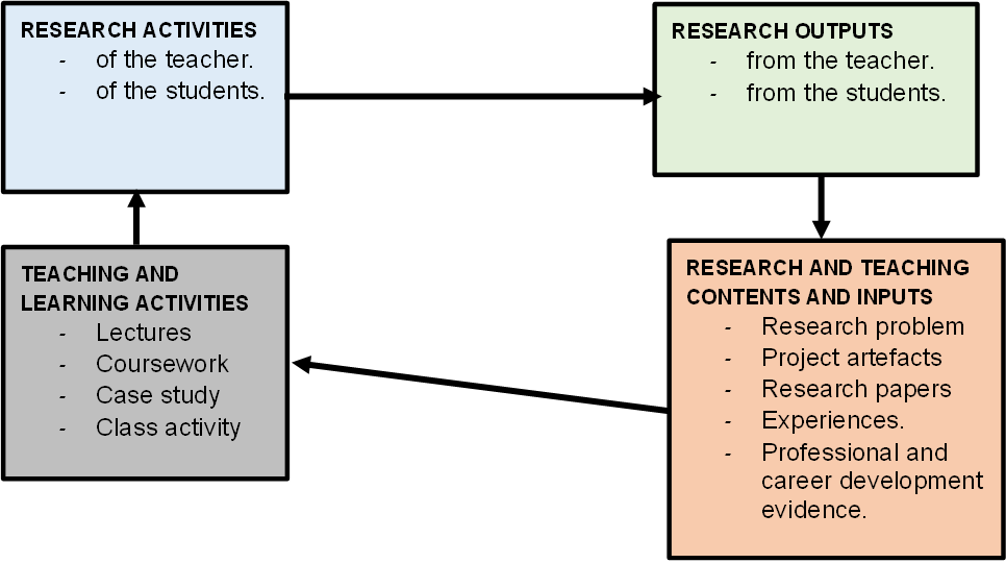
The impact of RIT could be instrumental (to shape teachers practice or institutional policy), conceptual (to elucidate university teaching and reframing conversation on the epistemological implications of RIT) or capacity-building (to enhance personal and professional development) (Joseph‐Richard et al., 2021). CReTeaM was built on constructivist view of knowledge acquisition in order to elicit high degree of dialogue among students and knowledge was often created through students' creativity, imagination and problem-solving skills whilst I take a position of a facilitator/mentor, providing useful feedback and asking critical questions that draw students into deep thinking and active learning. Section 3 presents two case studies to show how CReTeaM was applied in my research and teaching activities.
3. Case Studies on CReTeaM in Higher Education
CReTeam has a cyclic framework and it contains four distinct phases: Research Activities; Research Outputs; Research and Teaching contents and inputs; and Teaching and Learning Activities. The two case studies will be presented using the four phases of CReTeaM.
3.1 CASE STUDY 1: Exploitation of Air Engine Project Artefact for Teaching and Learning
This case study involved an interpretation of engineering drawings of an air engine produced by a Lecturer. The engineering drawings were used to set project-based and team-based Coursework for Part A students in engineering management and product design engineering. The artefact from the project was subsequently used for class activities, coursework and further research project.
3.1.1 Research Activities
Students were expected to conduct own research and attend training at the workshop to enable them interpret the drawings, fabricate the parts at the engineering workshop and assemble the parts to manufacture the air engine. The air engine was tested at the end of the project. Speed (rpm) and pressure (psi) data were recorded in a table and plotted by the students as part of the Coursework. The combined data from all the groups were used to set a Coursework on statistical process control and quality management in a different Module.
3.1.2 Research Outputs
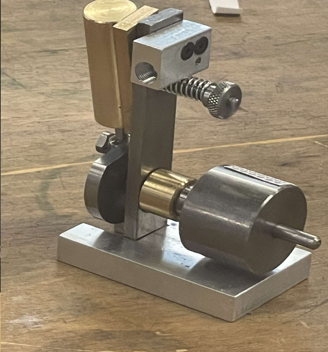
Two outputs from the students' coursework which acted as inputs into further research and teaching were the air engine prototype and the test data. Figure 2 shows the image of an air engine. Without using CReTeaM as a pedagogical framework, research and teaching activities would have been concluded after assessment and feedback to students. Interestingly, using CReTeaM motivates an evaluation of the outputs from the research and coursework with an intention of deciding whether outputs from the projects or coursework could be integrated into further research and teaching activities. This pedagogical approach empowers a mindset of continuous improvement of research and teaching in an evolutionary and cyclical fashion, which ultimately increases the efficiency and effectiveness of teachers.
3.1.3 Research and Teaching Contents and Inputs
The outputs from the air engine project were used to set Coursework for MSc students in lean and agile manufacturing module. First, the students were asked to conduct research and develop a novel integration of photovoltaic modules, electrolyser, fuel cell and battery for distributed clean energy generation. My previous research papers were provided to enable students to deepen their understanding of the design, scientific and engineering considerations (Ogbonnaya, Abeykoon, et al., 2019; Ogbonnaya et al., 2021; Ogbonnaya, Turan, et al., 2019). This was intended to provide resources for the students to learn in order for them to propose solutions to novel integrated photovoltaic-air engine-fuel cell energy system configurations, whilst considering other assessment criteria such as sustainability, manufacturability, supply chain management and risk management (Ogbonnaya & Hegarty, 2024). The combined air engine test data was used to set a Coursework question on developing a statistical process control and quality management process and procedure for large-scale testing of the air engine. The circularity is realised from using the test data and prototype to create additional teaching and research activities.
3.1.4 Teaching and Learning Activities
Two of the air engines were disassembled and used in an in-class activity to demonstrate the need for standardisation of processes in lean manufacturing. The Group activity required Group A to assemble an air engine without the assembly drawing but looking at an assembled air engine. Group B was given the assemble drawing as well as an assembled air engine. Group B assembled the air engine faster than Group A. The outcome of the in-class activity was the basis for a class discussion on standardisation, visual management and elimination of wastes from operations. Using the air engine artefacts, students engaged in hands-on activity, observed and compared the two approaches. The lessons learned were very clear as students commented on the activity in relation to the topic.
3.2 CASE STUDY 2: Research and Teaching on Questelligence Theory and Domain-based Systems thinking
The second case study on how I have applied CReTeaM was based on a research I started as an independent research from 2010. The evolution of the research led to publications of books, templates, models, blogs and articles on the Questelligence Theory and Domain-based systems and systematic thinking. This case study will show how the Questelligence theory has been investigated by students and how they innovatively applied the framework for creative and analytical thinking for problem-solving.
3.2.1 Research Activities
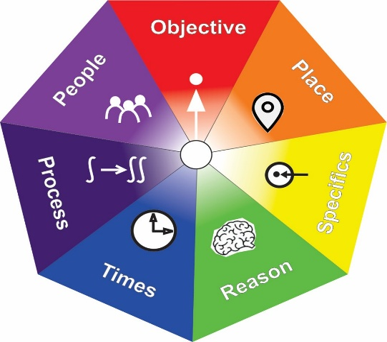
From my perspective as a teacher, the research activity focused on theory of mind and systems thinking theory and how theoretical propositions could be applied in communication, problem-solving, metacognition, games design, mathematics, project management, etc. The research has helped me to develop conceptual models and execute projects using systems thinking and systematic approach. I have shared this with others under formal and informal settings. Figure 3 shows the 7 domains that underpin Questelligence theory and domain-based systems thinking theory. Extensive documentations of propositions on the subject can be found in my two books: Thinking, Knowing, Doing and Being (Ogbonnaya Chukwuma, 2021) and Domain-based Systems and Systematic Thinking (Ogbonnaya, 2024).
From the perspective of the students, their research focused on embodiments of the conceptual frameworks, theories and demonstrating the applications of the concepts and frameworks with me as a guide. For instance, two students worked on designing and prototyping of spinners for the gamification of the idea. A student designed and prototyped a mechatronic spinner (Ogbonnaya & Ranjan, 2026) whereas the other student designed and prototyped a low-cost mechanical spinner as a final year project (Ogbonnaya et al., 2020). The students adopted a Lean and Agile Design and Prototyping (LADP) Methodology for product innovation which focuses of achieving a prototype using lean and agile principles. By using LADP for conceptualising, designing, formulating physics of systems, fabricating components, optimising, assembling and testing of a prototype of an engineered system, the students can translate conceptual ideas into prototypes. This can be applied for other problems that requires prototypes.
Students have applied the domain-based systems theories in brainstorming and problem solving. For instance, students have studied supply chain management based on Domain-based risk management framework. This involves identification and classification of risks based on domains of objective, people, process, time and place using the reason and specifics domains as enablers.
3.2.2 Research Outputs
Output from the students' research on the embodiment of the seven domains of Questelligence are shown in Figure 4(a) and 4(b). This prototypes were designed to facilitate teaching and learning of statistics and experimental probability at Primary and High Schools. The spinner can also be used to create games for fun activities such as co-creating stories using domain-based thinking.
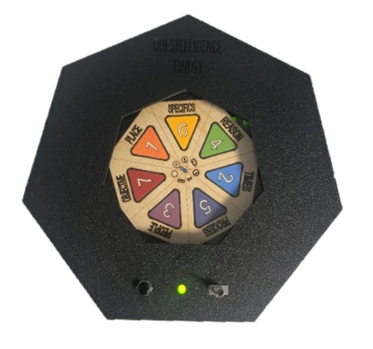
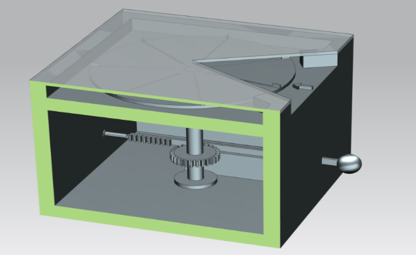
Figure 5 shows how a student applied domain-based thinking for brainstorming on possible areas to consider when formulating risk management framework for a food manufacturer. The student specifically defined the domains that could trigger risks and the next step was to translate the identified domains into risk statements, which can be assessed and managed. This approach ensures that risks are categorised into domains and managed through a systematic approach. The output from the student enabled me to validate that it was possible to use the Questelligence framework to structure thinking in a systematic and understandable way. By limiting the spaces to five domains of risks, the risks were critically analysed for understanding before categorisation.
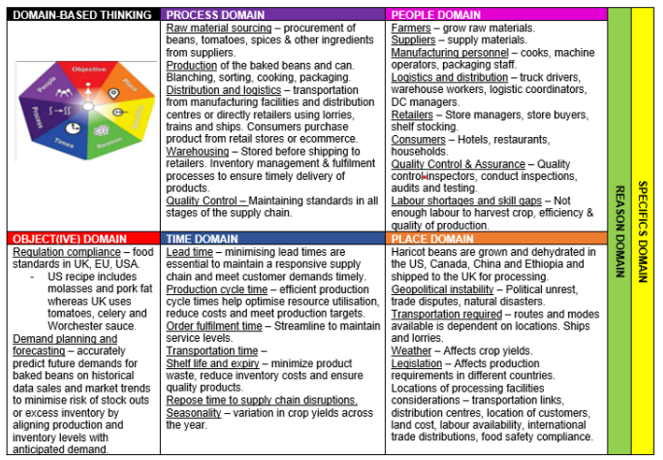
Figure 6 shows the result from an undergraduate student project which investigated supply chain risk management in sportswear manufacturing and distribution networks. This particular question was based on objective domain to understand the motivations and considerations of sportswear customers in other to set performanance objectives for sportswear manufacturing. These factors were deliberately situated within the Questelligence domains. Quality and price were from Objective domain, longevity was from Time domain and Accessibility to Customer was from Place domain. In this study, quality and price remained strong factors which is similar to what consumers value.
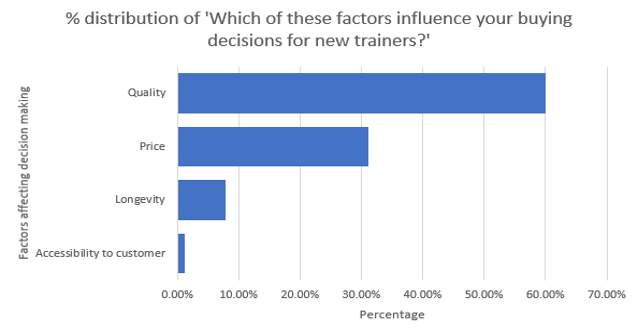
Figure 7 shows the result from an MSc project in which the student created an algorithm using Python to classify words that respondents used to respond to an open-ended question. He categorised the themes into domains so that they can be translated into operational strategy and management activities. The analysis provided insights into the thinking of the respondents, with an assumption that the keywords they mentioned keywords ranks high in terms of priority. This metacognitive analysis assumes that the number of times the keywords were mentioned correlated with painpoints or sweetspots. For example, majority accepted that they trust the safety and quality of toys they buy.
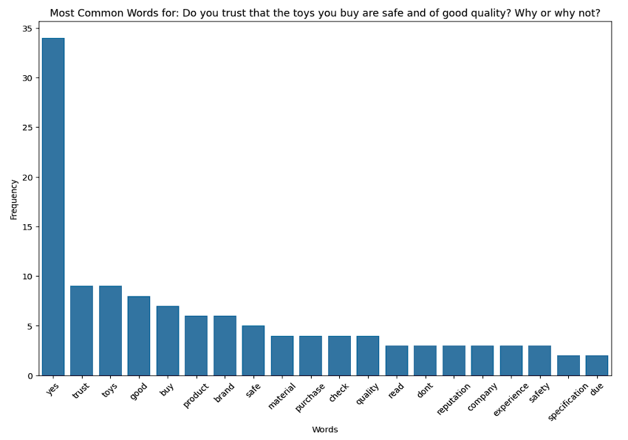
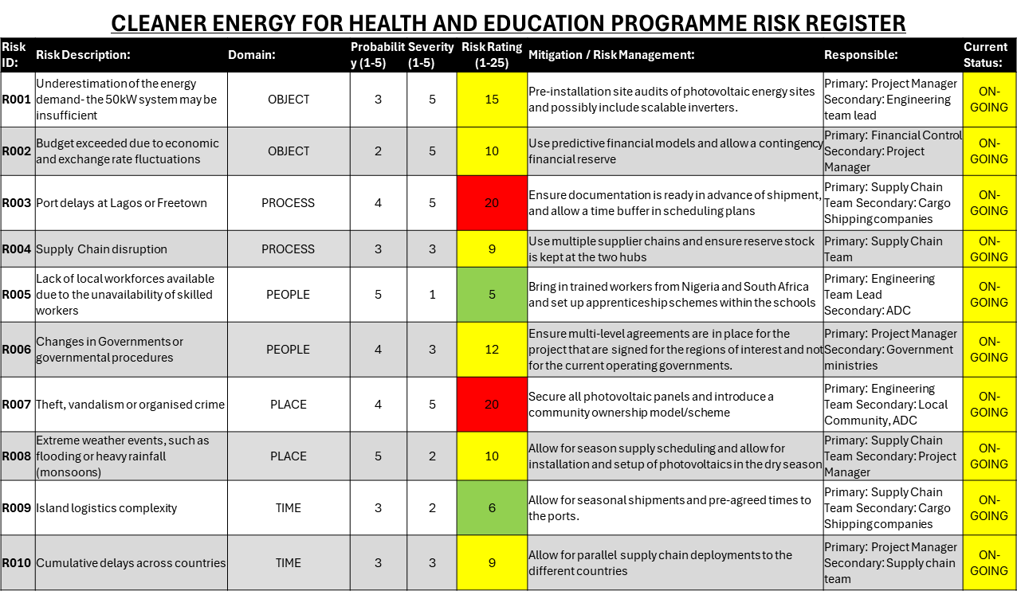
Table 1 shows the classification of risks using domain-based risk management approach applied in MSc module on engineering project managemnt. This output creates an exemplar that future students can study to create risk register for projects and operations.
Table 1. Classification of risks using domain-based risk management approach
3.2.3 Research and Teaching Contents and Inputs
In the case of the coursework focusing on domain-based risk management, students were required to identify, classify and evaluate risks in manufacturing operations or projects in order to propose risk management strategies. Table 1 was an output from risks associated with installing photovoltaic systems in schools and hospitals in five African countries. Domain-based risk management provided them with critical lenses to evauate the domain of risks associated with the project and the context of the project. This could be beneficial in clustering risks so that experts can manage them based on technical domains. For instance, people risks can be managed by Human Resources Managers or Team Leads. Process risks can be managed by technical managers or leads. The outputs from the student Coursework and projects indicate that Questelligence theory form a body of knowledge that could create research and teaching activities, thereby reinforcing skills of the student in creative problem-solving using domain-based systems thinking. Moreso, deeper reflection on the artefacts and results generated by the students tend to validate the theoretical propositions and models, which offers incentives for creating more projects and teaching materials based on the Questelligence theory.
3.2.4 Teaching and Learning Activities
The Questelligence Theory (QT) and Domain-based Systems Thinking (DBST) are epistemological, ontological and metacognitive models for thinking of complex and complicated systems. This body of knowledge leverages the theory of thinking and systems theory to generate and implement teaching and learning activities focusing on systems and systematic approach to solving problems.
Recently, I designed an MSc module on project management using DBST framework. The contents were organised in lectures focusing on objective domain of project management, people domain of project management, place domain of project management, process domain of project management, time domain of project management, Systems integration domain of project management involved the application of reason and specifics domains to tailor the other five domains. This compressed the contents required to manage projects into 5 domains, thereby reducing the cognitive cost of understaning the principles, methodology, tools, techniques and processes of project management. Because this the first time of designing Modules using Domain-based Systems Thinking, I collected feedback from the students and the feedback were positive. The use of DBST framework for module design may include a General introduction lecture, five lectures focusing on the five domains (Objective, People, Place, Process and Time), a lecture on system-level integration and a lecture on case studies, depending on the type of the module. This effectively provide a structure that contains a minimum of eight (8) lectures.
4. Critical Reflection on CReTeaM as Pedagogical Framework
This paper advances the argument for circularity of RIT as a means of enrichment of educational contents, teaching and learning activities using research outputs. This improves the personal, career and professional development of a research-informed teacher. RIT mindset has already been proposed by (Joseph‐Richard et al., 2021). In their work, they stated: "because of RIT, lecture design, delivery, assessment and student support activities have become more inquiry-focussed; study spaces have turned into collaborative learning contexts and classroom communications have become more comprehensible". CReTeaM aligns with their proposition as it reflects my experience as a teacher in Higher education institution who has a significant understanding of UK Professional Standard Framework (UKPSF), having been recognised as a Senior Fellow of Higher Education Academy. I also have knowledge of pedagogy from my qualification for Postgraduate Diploma in Education. From experience, I believe that circularity of RIT in form of CReTeaM can increase the efficiency and effectiveness of teachers in higher education institutions across the globe. This is because there is a possible loss of opportunities for impacts whenever useful research outputs is not utilised or underutilised. These losses are bound to dramatically reduced when circularity takes the center stage in the implementation of RIT using CReTeaM. The application of reflective practice to explore and understand opportunities for greater impacts from research and teaching activities appears to be a crucial point this paper seeks to advance.
From the case studies, the teaching and learning activities on air engine have led to listing further research project for undergraduate final year students which will focus on thermodynamic analysis (or energy and exergy analysis) of configurations proposed by the MSc students. The output of this final year project can be published in a peer-reviewed international journal and subsequently used to create teaching content or further research activity. By reusing ouputs from research and teaching activities, research and teaching impacts can be enhanced through continous improvements and benefits of lessons learned. CReTeam offers an opportunity of creating a Community of Practice (CoP) based on sharing best practices from the approach. For me, CReTeam remains a pedagogical practice and professional development strategy that continues to improve my overall impacts with research and teaching activities.
Unlike the air engine project which was a practical activitity, QT and DBST were theoretical. Yet, the case study shows that it provides a creative, analytic and reflective framework for students to engage with coursework and practical projects. The recent application of the DBST for module design and delivery of a project management module was a testament on the utility of CReTeaM as a pedagogical framework in a higher education context.
To increase efficiency and effectiveness of RIT in HEIs, CReTeaM needs to be embeded into institutional and national pedagogical frameworks. Research from academics and students can enrich education of future generation in the fast-paced learning environment driven by AI tools and GenAI infrastructures. Furthermore, when HEIs and national government support Open Access Publishing, Open Courseware (e.g. MIT Open Courseware) and other Open access educational platforms, impacts of research and teaching further increases. UNESCO Recommendation on Open Science considers research outputs as public good for all humanity. Consequently, institutions should consider the implementation of CReTeaM to make original knowledge to be openly available, accessible, reusable, whilst promoting transparency, rigor, collaboration and ethical values.
5. Conclusions
This reflective practice paper proposed CReTeaM as a model for enhancing the impacts of RIT in Higher Education Institutions across the globe. I used two case studies to show how CReTeaM can enhance research, teaching and learning in a cyclic, impactful and continuously improving fashion. The first case study focused on the reuse of an air engine project artefact and experimental data from a Coursework from part A students for creating MSc coursework and a class activity. The second case study provided evidence on the development of a novel pedagogical approach based on Questelligence theory and domain-based systems thinking. CReTeaM could improve the efficiency and effectiveness of teachers whilst improving learning experiences of the students due to the circular positive reinforcements between research and teaching activities. This should be applicable to other disciplines beyond engineering and manufacturing.
List of Abbreviations
AI Artificial Intelligence
CReTeaM Circular Research and Teaching Model
DBRM Domain-based risk management
DBST Domain-based Systems Thinking
DBT Domain-based Thinking
RIT Research-intensive teaching
GenAI Generative Artificial Intelligence
QT Questelligence theory
Supplementary Materials
NA
Author Contributions
Conceptualization, CO.; methodology, CO.; software, CO.; validation, CO; formal analysis, CO.; investigation, CO.; resources, CO.; data curation, CO.; writing—original draft preparation, CO.; writing—review and editing, CO; visualization, CO; supervision, CO.; project administration, CO.; funding acquisition, NA.
Funding
This research received no external funding.
Data Availability Statement
NA
Acknowledgments
Images and tables from undergraduate and postgraduate students work have been used to illustrate the applicability of the proposed CReTeam for Higher Education research, teaching and learning. I acknowledge the following students in no particular order, Chin Cheung, Ron Au, Alex Gore, Holly Radbourne, Rosie Dennise, Callum Cockcroft and Chagary Ranjan.
Conflicts of Interest
The author declares no conflicts of interest.
References
- Joseph‐Richard, P., Almpanis, T., Wu, Q., & Jamil, M. G. (2021). Does research‐informed teaching transform academic practice? Revealing a RIT mindset through impact analysis. British Educational Research Journal, 47(1), 226–245. doi:10.1002/berj.3681
- Limniou, M., Mansfield, R., & Petichakis, C. (2019). Students' Views for a Research-Intensive School Curriculum in Psychology: Research-Teaching Nexus. Creative Education, 10(04), 796–813. doi:10.4236/ce.2019.104059
- Ogbonnaya, C. (2024). Domain-based Systems and Systematic Thinking. KDP Publishing.
- Ogbonnaya, C., Abeykoon, C., Damo, U. M., & Turan, A. (2019). The current and emerging renewable energy technologies for power generation in Nigeria: A review. Thermal Science and Engineering Progress, 13. doi:10.1016/j.tsep.2019.100390
- Ogbonnaya, C., Abeykoon, C., Nasser, A., Turan, A., & Ume, C. S. (2021). Prospects of integrated photovoltaic-fuel cell systems in a hydrogen economy: A comprehensive review. Energies, 14(20). doi:10.3390/en14206827
- Ogbonnaya, C., Cockcroft, C., & Ogbonnaya, O. R. (2020). Using Artificial Intelligence Tool to Facilitate Design and Materials Selection Processes: A Case of Rapid Prototyping of a Mechanical Spinner Using Additive Manufacturing. Dialogic STEM Journal, 1(1), 1. doi:10.66845/dstem.2026.00008
- Ogbonnaya, C., & Hegarty, G. (2024). Manufacturing Strategies for a Family of Integrated Photovoltaic-Fuel Cell Systems. Energies, 17(19), 4837. doi:10.3390/en17194837
- Ogbonnaya, C., & Jbilou, S. (2026). Bioinspired Teamwork and Leadership Iin Engineering Organisations based on Japanese Bees and Queen Ants. Dialogic Society Journal, 1(1), 1. doi:10.66845/dsj.2026.00005
- Ogbonnaya, C., & Ranjan, C. (2026). Design, Prototyping and Testing of Mechatronic Spinner for Domain-Based Systems Thinking. Dialogic STEM Journal, 1(1), 1. doi:10.66845/dstem.2026.00001
- Ogbonnaya, C., Turan, A., & Abeykoon, C. (2019). Energy and exergy efficiencies enhancement analysis of integrated photovoltaic-based energy systems. Journal of Energy Storage, 26. doi:10.1016/j.est.2019.101029
- Ogbonnaya Chukwuma. (2021). Thinking, Knowing, Doing and Being. KDP Publishing.
- Robertson, J. (2007). Beyond the 'research/teaching nexus': exploring the complexity of academic experience. Studies in Higher Education, 32(5), 541–556. doi:10.1080/03075070701476043
- Rose, K. H. (2013). A Guide to the Project Management Body of Knowledge (PMBOK Guide) Fifth Edition. Project Management Journal, 44(3), e1–e1. doi:10.1002/pmj.21345
How to cite this article
Cite this article
APA style shown. Use “Cite” for MLA, Chicago, IEEE, BibTeX and RIS formats.
Metrics
723
Article views
114
PDF downloads